AUTOBIOGRAPHY OF CLARISSA BETHENA WORKMAN LEE
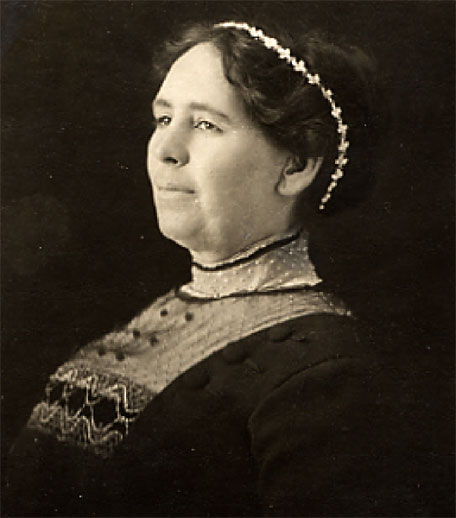
(Last paragraphs written in 1959 & 1960)
Page 1
I was born August 24, 1873. My father was Abram Smith Workman. My mother was Millie Bethena DeVoo. I was born in old Virgin City, Southern Utah. I had a sister 15 months younger than I. Our mother died when my sister Lucy Emma was 18 months old. She died in childbirth, having Preava Placenta and she bled to death before the baby was born. After her death they had her open and took the baby out of her womb, dressed it and buried it in her arms.
We two little girls lived with our grandmother Rebecca Workman for a while. Our grandfather Jacob Workman was very ill and we were sent to Virgin City from Goulds Ranch, where my grand parents lived to stay with our Aunt Fanny Stratton. Then later we were taken to our Aunt Nancy Redd in New Harmony. Our father was away most of the time working. Every "time when he came to see us we were so happy to see him. We would beg him to get us a new mamma. He would tease us and say he could not find us a mamma unless we would accept an Indian woman. No, no, we would have none of that. Then one day Aunt Nancy brought the news to us that our daddy was coming and was bringing us a new mamma. Oh, what joy. In a few days they came. Her name was Julia Hatch, from Hatch Town on the Sevier river. They went to St. George to the temple to be married. There she stood for my mother to be sealed to my father. We two little girls were also sealed to my dead mother and my father because they had been married by civil authority. The Temple was not finished when my father and mother were married. While we were at Harmony with Aunt Nancy my father was working on the St. George Temple.
We were taken to Hatch Town where my father had built an adobe house of two rooms with a fireplace in one end. .That was our home for a long time it seemed to me. Tines were very hard in those days and my father very poor. I shall never forget that first winter in Hatch. My father had to go away to work. He had a job taking care of sheep for the Hatch brothers on the winter range on the other side of Kanab at the foot of the Buckskin mountains. Before he went away he haulled and cut great ricks of pine and cedar wood to keep us warm for the winter. That was the worst winter I have ever known in all my 85" years of life. The snow was ten feet deep all over that country. The cattle died and many a night we went to bed hungry. The mail carrier took word to my father that a baby was born to his young wife Julia. They named her Rhoana. They did not expect the baby for another two months. He was greatly worried and started home on foot. He had to cross the divide and the snow was very deep in January. He had snowshoes. It was night when he reached Jim Little's ranch. No one was there as it was their summer ranch. His feet were frozen. He put them in a cold spring after breaking the ice and then went in the old cabin, broke up some of the pine floor and made a fire in the fireplace. There he shivered all night, found some old gunny sacks, tied up his feet as he could not wear his shoes and I just remember seeing him coming and ran out to meet him.
While he was gone My mother went home to her mother's because she was in no condition to stay home. Her sisters Hattie and Miley were big girls and they took a bob sled and brought wood from our house to their house to keep us from freezing. There were no men on the place. I do not remember if father went back to his job or if we went home. That was a sad winter for me. We were little girls and were never allowed to forget that we were orphans, not half as good as the Hatches. We took what ever they did not want. I am sure
they had no idea the impression they left on us. I do not think I ever did get over it.
A few years later my father took Uncle Sam Henry's cows on shares. We lived in a beautiful valley above Panguitch Lake; milked 30 or 40 cows and made butter and cheese. It was my job to take care of the calves and whatever else I could do. That summer my mother had another little girl. Her name was Mary Elizabeth. It was a hard time. My mother nearly died. My father was so very worried for fear he would lose her. She got better but it was a long time before she was really strong again.
Father got one third of the calves and half the butter and cheese they made. In the winter we moved back to Hatch. Father and mother took the pretty yellow butter out of the whisky barrels, moulded it in two pound packages and father went to Silver Reaf, Kannarre and other mining town and sold the butter and cheese for a little money. I tell you money was a scarce article. I think we staid on that Henry ranch two summers. The calves Father got on shares gave him a little start of cattle which made times better for us.
Then later there was a move to build a new town over on Yellow Creek, a small stream near Bryce Canyon, a branch of the pirear (Pyrrhea) river. So father moved over there, built a house of sawed logs. There we two girls, Clara and Lucy,' grew into young womanhood. .We used to work for people when they were sick or needed help. We got one dollar a week. The top wage for a girl was $2.00 a week.
I worked for Jerome Asay up on Asay Creek. I nearly married him in polygamy. I will leave the details out as it was so ridiculous
Page 2.
and-has no -bearing on my real life except-that if It had not been for him I would probably have married Cliff Bunker and would have raised a large family in the church of L.D.S. In the summer of 1890 my Mother gave birth to a sweet little girl named Millie after my mother. I staid home to take care of her and the house while Mother was down.
Now I have not mentioned all the children born to my step-mother. There was Abram, Abbie. Meltiar, Lydia and John beside the three sisters I have mentioned. My Father raised as fine a family as any man alive. I am not speaking of myself. I have turned out to be the back-slider, as my life has been so different to the others because I married an Outlaw, yet one of the finest principled men ever born His history goes with my history which I will write very soon. I loved him to desperation. I would have gone through hell for him if necessary. He was a handsome man and loved me as much as I loved him. After Mother was up and around it was necessary for me to go to work again. We had a neighbor that lived across the street, by the name of Joe Asay. He was a carpenter and was working for Hi Clark up on a new ranch on the East Fork of the Sevier River. He came and asked me to go back with him as the Clarks needed a girl to work. They were building a new house, corrals and fences and milking cows, making butter, raising hogs and so on. So on the 25^th day of July I went with Joe Asay to work for Hi Clark. That was beautiful place up in the tops of the mountains. I can see the picture of it any time I look back in my memory. In a pretty narrow valley a small clear creek ran through a meadow. At the head of the valley there were three canyons breaking in from the surrounding hills covered with pine and quaking aspens. The deer used to come down to drink in the evening. The house stood on the left side of the valley on the gently sloping hillside. The corrals were back of the house and a shed was there where the saddles and harnesses were kept. Down at the edge of the valley a short distance south of the house was a milk house. A big spring of cold water ran past the door. That is where we got the water for household use. The milk house was made of logs. In the back, standing out from the wall was a milt rack. This was of slats nailed on each side of an upstanding timber. The milk pans were set across the two slats, and over the top one was spread a sheet to keep the milk clean. The family consisted of Hi Clark, a blond, slim man with red complexion. Sabrina, his wife, was a pretty, small brunette. Louis, a boy of ten years, looked like his father. Evva was very pretty and could sing like a nightingale. Little Sabina was a brunette and pretty. Then there was William Lee, Mrs. Clark's brother. I was introduced to them as Miss Workman. .Bill was a rough looking man 13 years older than I. He wore a heavy mustache. Was dark complected with keen blue eyes that saw everything in detail. Of course a girl of my age in that day was always looking for a prospective husband. Or at least I was. I was 17, getting too old to be single in that day. But Mr. Lee looked like an impossibility so far as I was concerned.
But he was so .jolly and full of fun and everyone else was old. I just had to have someone to play with. Some fun every day at the expense of someone. The deer would come down in the valley to graze and drink. We would stand on the porch and watch them. Bill loved to hunt and kept us in fresh venison most of the time. I would fry it in butter and make gravy. I had not been there but a few days so I thought I would play a joke on him. I told him I saw a bunch of deer around the bend. He grabbed his gun and started to go after them, stepping high and rushing to get there before they got away. I went in and told Mrs. Clark I had sent Bill on a wild goose chase. We looked out the window at him and were laughing, thinking it very funny. The next time we looked out the window we saw him coming back with little Eva holding his hand and trudging along by his side. She loved her Uncle Bill and ran to tell him we were pulling a joke on him. When he came in the house laughing, he said to me "Young lady, I will get even with you. Don't think I won't!" Gee, but I was a little leary. I wondered what he could do to get even with me. I was determined he would not get even and I watched him like a hawk. I don't suppose that he ever gave it another thought, but it never left my mind.
We got up and milked the cows at six every morning. Bill and Hi were breaking wild cows to milk. .Lewis tended the calves and I milked the gentle cows, some times twenty head before breakfast. All hand milking. Then Bill and I would take the milk to the milk house, strain it into pans, set it to raise the cream. Separators had not been invented then. After the milk was taken care of I would go to the house, make biscuits and get breakfast, then do up the dishes and house work. Then back to the milk house where I skimmed the milk of the past days, put it in a churn. Bill worked the dash up and down to bring the butter while I washed pans and put them in the sun-to sterilize. When the butter had come I would take it up and put in some more cream for Bill to churn. I would wash and mix the butter, put in salt and work it to the proper consistency, set it up and take the butter from the days back and work all the liquid out of it and pound it down in a whisky barrel, covered it with a damp cloth. By this time Bill would have another churning done and again I washed and
Page 3
worked the butter. This went on day after day. One day Mrs. Clark asked me if I could make cheese. I said, "Yes, ma'am, I can." So she said we did not have enough pans to set all the milk we were getting and she wanted me to go to a ranch 5 or 6 miles down the valley to get some rennet so we could make cheese. She said Bill had said I could ride his race horse, old Fox. I hated to go alone over that lonely road through a dark forest where panthers screamed at night. The road was very new and wild with many bog holes all the way. I had been over the road but once and I felt strange and scared but I was going just the same. I kept all these missgivings to myself and put on a brave front. Mrs. Clark kept telling me that Bill's horse was so gentle and safe his sisters all rode him. So the afternoon came for me to go to get the rennet. I had done the washing on a board that day beside all the other work we had to do every day. Mrs. Clark brought me her riding habit. It was a long black skirt with a black jacket, a black felt hat with a nice long plume on the side. Gee, but I looked spiffey. Bill had saddled Fox and Pioto, too. He had not asked me if he could go with me. I surely wanted him to go because I was afraid. In those days women were very reserved. If it was now a sensible girl would say, "Bill, I wish you could go with me, I am afraid." But in those days a girl never put a foot forward first for fear of being misunderstood. I was all ready so I lifted the long black skirt so I would not step on it and went down to the shed. Our skirts were long, below our feet when we were on the horse, so as to make sure that no man ever did get to see our legs as the wind whipped the skirts. Bill lifted me on my horse. His horse was not bridled. In a split second I thought, "Now if I wait here for him and he rides off the other way it would be very embarrasing and he would sure be even with me." At that, I kicked Fox with my heel, slapped him with the whip on the end of the bridal reins and off he jumped in a dead run. I would pull him up with the bridal reins and then grab the horn of the saddle. I was sitting straight sideways, with my boot in the stirrup. Fox ran down the hill and turned to the right toward a bunch of wild range horses in the meadow. He came to a wide bog hole about 20 feet wide. He jumped over it, my hat fell off and he nearly threw me off but I was holding myself in the saddle by the horn. Bill saw what was taking place. He got on Paint and cut us off before we reached the wild horses. When he saw old Paint, his running mate, Fox slacked his pace and turned toward him.
When Bill rode up to me I was all out of breath and said, "Well, Mr. Lee, you sure did get even with me!Ó. He said, "Oh, Miss Workman! Don't think I would purposely do a thing like that". I was ready to go to the house and let someone else go on the errand. I did not know it then but his sister was match-making. That was the way she had of getting us together in a social way.
Bill said, "The horse is all right. We will go get your hat, that fell off when Fox jumped the mud hole."
So we went on the errand, got the cheese rennet, came home and rode out after the cows, put them in the corral and did the milking, then the supper work. After that he built up a big bonfire in the yard among the pine trees and we all sat around the fire and sang songs. Little Eva and Lewis sang together beautifully. I was a good singer, too; could sing over a hundred songs. Bill gave us a few cowboy songs. Hi and Sabina also sang some songs. So we had a pleasant evening out there in the pines beneath the stars.
Bill puzzled me because he always wore two six shooters, forty-fives. I thought he was just showing off. I was accustomed to kid stuff. So one day his sister was telling me what a wonderful mother he had. She was so fine and his family were so nice. I said, "Why in the world does he wear two pistols all the time " Even when he was roping wild cows he had on two guns. So she started to tell me. She said Bill got into some trouble in Arizona, of no fault of his, and if an officer should come for him he would not be arrested. Then she smoothed it all over, making him a hero. By this time we had gotten quite friendly and would sit on the porch in the evening and he
would tell me such interesting things about his life and experience and I would preach Mormonism to him.
One evening as we visited I said, "Bill, I had a dream about you last night." "Yes," he said, "So you are dreaming about me. That is good."
I said, "Well it was not a pretty dream.". "Tell me, what did you dream " "Well, I dreamed that the officers from Arizona were after you for something you had done in Arizona and that was why you always wear the two guns."
He said, "That is quite a dream; but someone has been telling you things. Yes, I am in trouble. In wild Arizona there is no law but Mob law. They get a man unarmed and they take him out and hang him like a dog no matter if he is guilty or not. I had a friend, a young man from the East, the only child of an old couple. He had consumption. He came out to Arizona for his health. Took up a little ranch hear Heber, Arizona and named it Phoenix Park.
Page 4
The parents sent him money to live on while lie was trying to get well. Some times he would have a little left. So he saved it until he had enough to buy a cow or a horse so as to stock his ranch. One night a couple of men from the Hash Knife Cattle outfit were hunting stock up his way and they dropped in to spend the night. Next morning they got up to find the house surrounded by the mob. They made Jim cook breakfast for all of them and then put the two Hash Knife men on their horses, tied their feet together under the horse, then did the same with my friend Jim. They put ropes around their necks, put the other end around the limb of a tree and led the horses from under them leaving the three of them dangling. I found them there hanging. I was so mad if I had known who did that cold blooded murder I would have followed them and killed them. It was supposed to be the Vigilante Committee.
"Then one day I was hunting horses and came up on a tree with nine men hanging. .Some of them I knew. The maggots were crawling over their faces and working in their noses and mouths. I said right there and then I would never give up my gun to anyone no matter what the charges were. And so I never will. I will die fighting.
"So one time it happened. Winslow, Arizona was preparing to put on a big celebration for the Fourth of July. We were all training our horses for the races. I trained old Fox. Used to run him along the railroad track by the passenger train, and by golly, he could outrun it for a short distance. Then the day came for the big time. I had entered Fox in the race against a lot of Hash Knife saddle ponies and was at the outcome and my brother Ike was at the starting point. My horse came out first. Just a little, but plenty enough to give him the race. While we were discussing the outcome and they were not willing to concede to me, I offered to double the money and run it over. About that time a fellow by the name of McKinnie pulled a double barreled shot gun on me and said, 'Throw up your hands you white hat sun of a bitch!' I whirled around, pulled my forty-five and shot him in the shoulder. He threw his gun down and ran like a scared rabbit. Just for fun I kept shooting in the ground at his heals just to see him jump. The stake holders took the money and ran for town.
"About that time my friends crowded around me and said, "Bill, for your dear mother's sake don't get into trouble. Come and go home. Of course we were all drinking and had been most of the night before. So I went to my sister's house in Winslow, her husband Dave Blare ran a butcher shop there. "I went in the back bedroom and went to bed. About sundown my brother rode up to the back door on Fox. Said, "Bill, for God sake get out of town! There is a mob organized and they are going to lynch you by hanging you to a telegraph pole! So I rode out of town with twenty-five men behind barns and fences shooting at me. I kept going with bullets buzzing all around me. One came so close it cut the quirt off the horn of the saddle. Another one nicked the leather of the watch chain I had in my inside pocket of my pants. But I got out without even a scratch. I went to my ranch on Shuvelin up in the mountain south of Winslow. I put my horse in the pasture and went in the old log cabin and built a fire in the fireplace to brew some coffee. While sitting there waiting for my coffee to boil and alone watching the blaze flickering, I was startled by a thought-that hit me like a bullet. My God, I said, I am a fugitive from Justice, an outlaw!' That was not a very pleasant thought. No one came after me. I staid at the ranch, breaking horses to the saddle, branding colts and calves for two weeks. Then I decided to go to town and see what was going on. .So-I went and put up my horse at the livery stable and went to my sister Della's house; had supper with her and staid all night. Nothing happened, all was quiet.
Next morning after breakfast I walked down in town to the livery stable to see about my horse. On the way back, when I got near her house, someone started shooting, at me. They were at my back and I could not tell where the shots were coming from so I ran to the house and as I went in a bullet hit the side of the door throwing splinters from the door frame at me. I ran inside, told sister Della to run out the back way so she would not get hurt. She jumped up out of her rocking chair in time to miss a bullet that went through the back of the chair she was sitting in. Every time I raised my head above the window sill a shot would hit the house. I finally discovered the shots were coming from an upstairs room. The brave man was shooting from a safe place. No doubt it was McKinney. But he did not hit me, and when dark came I rode out to my ranch on or near Shuvelin Butte. From then on I was a marked man. Never knew when I would bite the dust from some sneak that would not dare to meet me face to face."
Then I would tell him that God had spared his life for some great purpose. There was a great work for him to do and that was the reason he had been spared from all those narrow escapes. Then I would preach to him. He would say that God had never prompted him like I said he would, and I said, "But, Bill, you must pray." "I do pray, but God does not answer my prayers. "I said, "You must have faith. Perhaps you are like the old lady who was so hungry, she and her children. So she put two rocks in her oven and knelt down and asked God to turn them into bread. After a long prayer, she got up and looked into the oven. The rocks were still rocks, and she said, 'I knew darn well he would not!'. ÒSo she did not have faith."
Page 5
That surely tickled him. I was not quite I7 yet, just a big kid. But I could quote scripture, trying to convert Bill. Every night as we sat out on the porch in the moonlight he would tell of his experiences which thrilled me as it was all so new to me. I had no idea anything like that was happening in the world. As Bill used to say, I was raised among tame cattle. Then we got to talking about his childhood. He told me of his wonderful mother and the hardships they went through at Lee's Ferry. How they lived in a wagon box while they were building their cabin. They built a brush and dirt damn across the Paria Creek and built ditches to carry the water to their farm and gardens, also orchard they had just planted. The first flood that came down that canyon would wash away the damn and then they would work all day to put it back and carry water until midnight to water the garden and trees to keep them alive until they could get the water out again. ¥ Emma and her children were there in that lonely, isolated place alone a great deal of the time. Once Bill walked 3O miles through heat and sand and without a drink of water, to the Pools to tell his father, John D. Lee the dam was out and they needed help. John came back with him with a team. I guess they were there without a saddle horse for a short time. Bill was 12 or 13 years old and his brother about 10. They were his mother's only help. A few years later the boys could handle the boat with their mother's help. They ferried across a band of young Navajoes who were going into Utah to trade Navajo blankets for horses. It was late when they got them over and they camped there by their place. Emma Batchler had a small trading post. The Navajos were standing around talking, not knowing that she could understand their language to a certain degree. They said, "We do not need to go on into Utah to get horses and cattle. Tonight when the family is asleep we will burn the house and kill the family and take all the stock from here."
It alarmed her, but she did not let on. That night they milked the cows and did the chores as usual. Then Emma gathered up some cooking utensils and food and went. out in the Navajo camp, cooked supper for her family and fed the Indians. Then she carried her bedding out and spread it on the ground in the camp. They sat around until bed time and the children went to bed. The chief said to her, "Why do you sleep and eat in our camp " She said, "I am watching you. I do not think you will steal from me while I am watching you." Then she went to bed and pretended to go sound asleep. But she was awake and still watching them. About midnight one of the smart alecks said to the leader, "Well, the stars are right now for the killing." The leader said, "No. No .kill them. She brave woman!"
When Emma first came to the Ferry she looked around and said, "What a lonely dell!" When her little blond daughter was born in their shanty home she named her Dell. Two years later another beautiful little girl was born. Emma and her children were alone. Bill tells me he staid with his mother, helping her to give birth by pulling on her hands and pressing on her back. That is the way they used to do. John D. says in his diary that the 6 year old girl was her only help. In that day no male was supposed to be present at such times. Not even a man doctor. Oh, No! A disgrace to have a man or a man child around. Only old midwives. They lost many a mother because they .did not know. My dear mother and sister were victims of such ignorance. Emma named the second daughter that was born at the Ferry Victoria after the Queen of England.
We sat on the porch every evening, he telling me of his experience; and I preaching Mormonism to him. He was a good story teller and I found him to be the most interesting and-exciting person I had ever met.
Every afternoon we would ride out after the cows. Some times we would get off our horses and sit under a pine tree making love and telling stories. One day he asked me to marry him. I said, "Bill, you are the most wonderful man I ever met. But I cannot marry you." "Why " he said. "Because you smoke. I want to be married in the Temple and unless you quit smoking you could not go to the Temple." "Well," he said, "I will quit smoking." I hugged him and kissed him and said, "If you will quit smoking and marry me in the Temple I will be glad to marry you."
He started the next day to quit smoking. I was sure he would. Had every confidence he would. .But every once in a while he smoked.
Then I would remind him of his promise. He said, "I will quit before we are married." He had quit for several days and I thought "Now he is all over it." One day he said to me, ''Next Saturday we are going down to see your father. I am going to ask him for your hand in marriage." So when Saturday came we rode horseback to my home. My folks liked Bill and so did everyone who knew him. But they wanted him to join the church. He did not say yes or no and they, like me, thought he was just a wayward Mormon boy and would soon see the light and take up the church again.
The next morning was Sunday. Father asked Bill to go to Sunday School with him. Of course, Bill went along just as he was, two six shooters and all. He was so used to wearing them that he thought nothing of it until he went into Sunday School and all the little children began pointing at his guns and tittering. He was so embarrassed. I think that was the last time he ever went to Sunday School.
Father consented to our wedding, of course with .hopes that Bill would come into the Church. We went back to the ranch that afternoon. Then we were betrothed. His sister was so pleased. The summer passed pleasantly. The date of the wedding was Oct. 6,1890. Bill continued to tell me many thrilling frontier stories. He was a good story teller. While dodging around in this wild and unsettled country, out in his camp, a stranger rode up on a beautiful stallion. He was a dapple brown, a breeding horse worht $5000.00 in anybody's money who was raising horses. The stranger staied around a few days, went away and would come back and forth. As they got better acquainted he learned the man was R. W. McNeel. Bill wanted this fine horse, so he traded McNeel other saddle horses for the Kentuckie Whip. He learned that McNeel had stolen the horse from fine horse breeders in Kentucky. Bill used to ride this fine animal and dressed him up in fancy navajo blanket and silver mounted bridle and saddle; made quite a dash when he rode him, as Bill sat on a horse like a trained cavalry general. When he needed supplies he got word to his mother at Hardy Station and she would order them from Winslow and the train men would drop them off at Hardy. and she would keep them until some night Bill would slip in to get his things and have a visit with his mother. He had a lot of friends who kept him posted as to where his enemies might be. One night he put this fine horse in the barn and intended to leave before morning. But he found out the officers were waiting for him out by his horse. Thinking he would come out and they would arrest him or kill him, did not make much difference to them which.
He sat up all night with both six shooters on and a Winchester across his lap, just waiting to see what would happen. His mother, dear Emma Batchelor, always got up early and started the fire to get breakfast for the section hands and whoever might stop in from the road. She kept all travellers who cared to stop and eat. Some time they paid if they had it, but they always ate if they had the price or not. Just after 5 A.M. old Hook Larsen came in carrying his rifle in his hands and began a friendly conversation.
"Good morning, Mother. Glad to see you." "Good morning, Hook. What are you doing here this time of day " "Oh, I am looking for R. W. McNeel and when I find him I will shoot him down like a dog and read the warrant to him afterward." Hook was a great big fat, pot-bellied man and a coward. He was reputed, to have shot more than one man in the back which was an unpardonable sin, according to the Western code. No one seemed to trust him. While he was- shooting off his mouth Bill sat in-the dining room not 6 feet from him and heard every word he said. He got so mad he was about to explode. Then he tip-toed out the middle door and stepped in front of old, fat Hook. He cursed him and his language would burn the typewriter if I wrote it. He told him if it was not for the dirty mess it would leave for his mother to clean up he would kill him right there. Hook pleaded friendship for the family and said, "Bill, I have no warrant for you, honestly. If I knew anyone was after you I would warn you, for I have always loved your mother for the fine things she is always doing for the poor and the sick." He then took his billfold from his vest pocket and handed it to Bill, and said, "You look through it and you will see I am telling the truth." He thought that while Bill was looking through the billfold he would get the drop on him and take him dead or alive. But Bill was not caught napping. He took the proffered purse and tossed it to his Mother while his keen blue eyes bored a hole in Hook's conscience. His mother found the warrant for Bill, handed it to Bill unfolded and said, "Here it is "Now, you big lying S.B. you eat this warrant. Chew it up and swallow it, your dirty ______I" Hook ate it and was glad to get off so easy. Then he said, "Well, Bill, if you are through with me I will be going on down the road." Bill said, "What became of the other s. of b's Hook " "Oh, they went back to Winslow on that early train. They said he knows we are here and we better get going before we get hurt. I said I knew you were here and I was going to get you. But now that is not to be I will be going." Bill said, "You better wait for the next train. Eleven miles is quite a walk.". Hook said, "Oh, I don't mind that." Bill said, "You better get some breakfast first." He refused and Bill said, "You dirty S.B. you stay and eat with me then you will have something to tell your grandchildren." So both men ate together, both kept their guns. Bill did not disarm him, he gave him an equal break but watched him very closely. After breakfast Hook started on foot. He wanted to get away from there.
Bill got his horse which was saddled so all he had to do was untie him from the manger and put the bridle bit in his mouth and gather up his supplies and he went back to his ranch.
Life was not worth much the way it was so he decided to make a change. A big change. He turned all his interests over to his brother Ike, saddled old Fox, packed old Pinto and started to go to Alaska to the gold mines. He got as far as Kanab, went to see his sister Sabina Clark and Mr. Clark wanted him to stay and help him on his new ranch. It was early in the spring so Bill thought it would be a good idea to work a month while his horses rested and got fat. He intended to sell them when he got to Seattle and go on up by boat. . While cutting posts for fencing the axe slipped and cut his big toe completely off except for a little tough skin on the bottom of his toe. He put it back and bound it up and it grew back and healed. It was quite some time he was laid up and not able to do very much except to make ropes for hackamores and make lariats from rawhide. This he could do sitting down. (Hackamores wore made from horsetail hair by spinning it into several strands and then twisting them together. Hackamore is a kind of halter.) By this time it was getting too late in the year to go to Alaska and as he said I came on the scene and he changed his mind. It was getting late and cold up in the high country and time to move the stock to their winter range. So the Clarks packed up their belongings and moved to Kanab. Bill took me home with my belongings on a pack horse, we both on horseback. Mrs. Clark had a pair of ducks she wanted to get rid of so she gave them to me for my last week's work. Of course I had no use for them but I never bothered to oppose her. We had the ducks in a box on top of the pack. On the way down they got out of the box. It was kinda funny to see that proud fighting man chasing those ducks all over the mountain, but he got them put them back in the box and we went on down the mountain. I wished afterward we had left the ducks for the wolves. My father was so mad about the deal Mrs. Clark pulled on a kid and they were such a nuisance. I never did know what became of them. Bill left me then and went back to move the cattle to their winter range. The calves went with the milk cows so they did not need milking any more. That was a happy summer for me.
Now the preparation for the wedding. Father wanted to have a big wedding with the whole town invited and a part of Cannonville, a small place a few miles from Georgetown. I had to make my wedding dress. Aunt Hattie Assay helped me. It was made of white dotted Swiss trimmed with wide embroidery. The back had two rows of embroidery with the edges turned in and laced with blue ribbon down the front. The skirt had ruffles of the same embroidery with blue ribbon bown in different places. With a wide satin blue sash. I had artificial flowers in my hair. No veil.
The dinner was a big job. We did not have super markets to buy the food in. We had to go to different ranches to get eggs enough for all the cakes and other things. Father killed a nice fat lamb. We had that and baked chickens. I did most of the gathering up and I walked all over the place. There were some ranches up on Sheep Flat. Had to climb that steep hill. I made several trips up there. Mother did most of the cooking.
The house where we lived consisted of three rooms downstairs and two up. There was a double fireplace built in the middle of the house, and a board partition on either side of this big fireplace to make the downstairs bedroom. Father took one side out so he could set a table the full length of both rooms. When all the people were seated, the food on the table, with a large four-tiered cake sitting at the end of the table where the bride and groom would sit. Then the bride and groom walked in from behind a curtain and stood at the head of the table in all their finery. All heads were bent over with eyes upon us. Then Father asked the blessing. Then called on the Bishop Henderson from Cannonville to perform the marriage ceremony. Then after hand clasps they were allowed to eat. A few gifts were then opened and admired. The next few days we started on our wedding trip. We took Father's team and wagon and took a load of wheat to the mill at Glendale, to be ground into flour. We stopped at Hatch the first night. There was a Patriarch there giving blessings. I sure did want to get my blessing but my husband would not pay for it so I never did get it. The next day we went on to the mill and we camped out the next night on our way back. In a few days Bill took me to a home he had provided down on the Lower Paria (Pirear). A small early pioneer settlement. He took Mr. and Mrs. Charley Roseberry with us. He was sending Charley to Arizona to bring his horses over. Mrs. Roseberry and her little daughter lived with us in one room. We had no stove. For nine months I cooked on the fireplace with a coffee pot, dutch oven, a stew kettle and a frying pan. I baked light bread biscuits and even pies. He said he would get me an old stove and I said no, when I got a stove I wanted a new one so I waited. When Charley got back with the horses he had arranged with Ike to have Ike's half for himself. But Bill would not let him have it. He paid him off and asked him to move his family.
My, what a happy day that was to have my home by myself. There was some lumber overhead on the beams where the ceiling should have been. It was only 6 inches wide. But Bill sawed it up and made me a cupboard, It was wide at the bottom and a little narrower at the top. He nailed it up on the wall. I put paper on the shelves and unpacked my few dishes and put them up. I was like a little girl playing house. That was the happiest day I can remember.
Bill had to break a team. He brought two matched geldings, sorrels. They were perfectly matched. I was so proud of them. He hitched them to the plow. It took all he could do to handle them. So I tried to hold the plow. I thought to push down on the plow handles to make the plow go down into the ground. I soon found out you lifted the handles to make the plow go down.
A little later he bought another place across town near the river. It had three rooms, a dirt roof, rough pine floor, with a nice fireplace. A lovely orchard on it. Three big cherry trees at the back. I could pick cherries at night by the lamp light. They made lovely pies that I baked in the dutch oven.
Bill got word from Mr. Stewart in Kanab that a horse buyer from Kansas City was coming and to get ready to sell some horses, That was very good news. So Bill went to the Wah-weap where his horses wore. While he was gone Mr. Stewart came right to our house, bringing the horse buyer, I got supper for them, baking cherry pies and in talking I made a great mistake. I said, "You tell Bill not to sell that sorrel team we had just broke to the harness." Bill had them hid out but when the buyer got down there he asked for then. Bill said they were not for sale. He said, "If I don't get them I will not buy any from you." So we had to let them go. Bill sold $1,500.00 worth, that was a lot of money for that day. It was cash, no checks.
Then Bill took his other team and went to Kanab to shop. He did not take me. I do not remember why. I guess I had to milk and tend the pigs and chickens. However, when he came home, among other things he brought me a new stove. A gold Medal. It had all the cooking utensils, including a copper wash boiler. My, what a day that was! When we got it all set up I invited my best neighbors over to dinner for the very first meal I cooked on it.
In the fall we had so many lovely apples and there was a horse race to be run that week. So Bill loaded up a lot of apples too and smarted up the canyon. I was with-him and he was anxious to get there that first day. It was not so far - about 35 miles, but Oh, the road!. We had to cross the Paria creek 275 times in that 30 miles. All sandy, steep banks. It was hard going all the way. We were working a fine Hamiltonia brown mare. She was a very good work animal, always willing to do her part. With her was a little saddle horse we called Bill who was slower. Browney got discouraged and balked for the first tine. A balky horse is one of the most aggravating things on earth.
Bill got so mad. He whipped and whipped. Then beat her over the head with his six shooter. I was in the wagon sitting in the middle of the river so I could not get off. I begged him to quit beating my favorite horse. I was crying. He was cursing terribly. I had never in my life seen such terrible actions. At last, when I was going to get down in the water he came and carried me out. I could not make him stop, so I went off be-hind a rock where I could not see or hear him. At. last he took off part of the load and hitched the team on the end of the tongue of the wagon where the horses could get better footing and he got the wagon out. That was the last time we had to cross that river. It was too late to go on that night so we made camp. He put the spring seat out for me to sit on and built a campfire and sat on the ground across from me by the fire. I was looking straight at him. He was mad and pouting. At last I broke the silence.
"Bill," I said, "What makes you think that Jesus is bald headed " He burst out laughing and said, "What a hell of a question -that was!" He did not know that Jesus was as real to me as he was. But that broke his pouting spell. Next morning we got the team up to start on. Old Brownie's head was all swelled up until she looked like a Jackass. He felt very ashamed of himself. He took me in his arms and promised he would never, never beat an animal like that again as long as he lived and he kept that promise.
There is one incident I wish to mention back aways in this story". When he sold the horses he brought the money to me to keep. There were no banks there. I put it in the trunk. One day he came home and I was gone. The door of the trunk was not locked. He took the money out and that evening he asked me for it. I went to get it and it was gone. I was scared and then after teaching me a lesson, he told me he had it but someone else could have gotten it as easy as he did. I never, was that careless again.
We spent several years in that little frontier town. Bill was gone a great deal of the time and I got very lonely. I used to go visit my neighbor who had a little baby. (l really took care of him.) Her name was Mime Baulden. Her children live around this country yet. She has been dead for many years. We finally left the lower Paria village and settled at the head of a box canyon about 8 miles below Georgetown. We had a little farming land there, but not much. Later he bought another ranch called the Bareman place. There was a spring that ran out of the side of the hill. We got water from the river to irrigate the farm. We built a nice house there with peeled logs. There were three big rooms and two porches. We were very happy there and were just finishing plastering the house. We kept open house all the time for the cowboys and other neighbors and they were eating us out of house and home. I told Bill I was not going to serve free meals to everybody. We could not get ahead and still give away everything we had feeding the public. I wanted him to make me a sign to put out at the road side which announced that meals would be 25 cents. He would not do it so at last I took my ironing board and the cork off the ink bottle and wrote, "25 cents a meal." Well you know, we did not have many callers after that.
But one evening I saw two men corning in and I thought, "Well, I guess I have a couple of customers," and I began to think what I would fix for supper. They sat out on the wood pile talking to Bill. Pretty soon Bill came in. He said, "Clara, these two boys are from the Salt Lake pen, just got out and they want to stay here and work. I told them I had no work as it was winter but they said, 'For God's sake give us something to do and something to eat!" Well that got Bill down. But I said, "Oh, Bill we do not want that kind of people here." "Well, they will do some plowing and. work and all it will cost me is their board."
I never did oppose him in anything he wanted to do so they staid. We had a rock room that was on the place when we bought it and we lived in .it while, we were building the new house. I had a young baby. He was born in Georgetown as we had moved up there for the winter because of his coming. He was a few months old and Bill and I had been working on the house daubing up the cracks between the logs. When these men came. Bill thought they could help him do that. I had been mixing the plaster and carrying it to him to put in the cracks. These men seemed to be very nice, appreciative for shelter and food. They staid out in the rock house. Then one day while they were handling some heavy timber Mr. Lee got his leg broke. He fixed it up with splints, wrapped it tight and went to bed. The boys milked the cows and did whatever there was to do. Then they wanted to go hunting. So Bill let them take his horses to ride and pack and they went on the mountain to hunt deer. While they were gone a store was robbed in Panguitch. The boys came back without a deer. In a few days the officers came and arrested the boys. Jack and Pud, we called them. I never did know their real names. We did not believe they were guilty. So Bill told them he would go over and bail them out in a few days. So true to his promise he went. When he went to see the prisoners, the young sheriff, Tom Sevy, said very friendly, "Bill, we cannot let you go in to see them with your gun on." So Bill unbuckeled his gun and gave it to the sheriff. Then when he was ready to come out he was locked in. When he was tricked into giving up his gun the brave sheriff read the writ to him. He was trapped sure enough.
I was at the Ranch alone with my baby who was about 8 months old. Father came down and told me they had my Bill in jail. He took me home with him. I did not feel at home there so I went to my sister's and brother-in-.law, Jim and Lucy Burrow, Then the time for their trial was coming up. The sheriff subpoened me as a witness. My baby was sick and he excused me from appearing. I sent a letter to Bill and all the time I was getting more desperate. I would have taken a gun and turned him loose no matter what the consequence.
As time went on the baby got better and a man in Cannonville had a team he kept up and fed grain. He told me I could ride his work horse to Panguitch where I could get his brother Sam to take me on over the next mountain with a team. I was so desperate that I took him up. Rode Father's old mare Nellie to Cannonville and turned her loose and she went home. It was getting late by the time I got started. I saddled the old work horse, tied some oats on the back of the saddle and started. The road was sloppy and slick going up Bryce Canyon. When we got to the top of the mountain and looked across that flat it was like looking on an ocean of snow. Not a twig or a riffle across that vast-waste of snow ten feet deep. The trees on the mountain on the other side marked the edge of the valley. There was a trail broke where the mail crossed on a boat but it was level, too. If your horse slipped off the trail he would go in all over. Once my horse slipped and got his hind legs off but being strong and grain-fed he scrambled back. I knew a woman lived on a ranch about half way across so I planned to stay with her that night. I arrived about sundown. It was so cold. She was alone and delighted to have company. We put the horse in a partly built room she was building on her house so he had some protection from the wind, fed him his oats and she brought some straw she had in an old bed tick. I don't think he ate it.
I felt pretty low there in that vast expanse of snow and cold between my husband and my baby. I slept very little. The next morning after breakfast I saddled the work horse and started on my way, I had come sick and was . flowing terribly and oh, so sore. Every time the horse stepped and jarred me it hurt. After I got across the top of the mountain and started down Red canyon it had started to thaw. .The horse would slip this way and that, until I thought it would kill me. I kept going and went right to Sam Lee's. He took a team and buckboard and we went to a friend's who had stopped to our ranch many time to see if he would go on Bill's bonds so we could take him home. He would if we sent him the papers to sign but he could not go with us. That would take too long. So we staid there all night. Next day we started on. The snow was very deep in Bear Valley. They had sent teams to break the road for the other folks who were going to court. The jurors and witnesses.
We staid all night at a ranch where no one lived. There were a lot of people staying there. All had their own blankets. Sam had brought them for us. They had a big fire in the fireplace, but I was numb with the cold. That trip over the mountain on the horse had turned my face into blue and black and I looked a sight, but felt worse than that.
We bucked the snow all day. That night we stopped at a little place not far from Parowan because the team could go no further. I could see the church steeple in Parowan and how I hated to stay that night. But we could hot have seen him until morning anyway.
When we reached Parowan Sam got the sheriff. He met me outside and-we followed him. When he went to unlock the jail with those keys and chains rattling I tell you I had a terrible feeling. To know that my beloved was behind bars. We went down a hall and then into a large room, warn and sunny room
and Bill and Jack and Pud were there together. When I went in and Bill took me in his arms those two boys both cried and said. "We wish we had never come to your happy home and caused all this sorrow." And when they looked at me and the effect of that hard trip they surely felt bad. Of course, Bill was glad to see us.
Sam and I spent the next few days trying to get bonds for Bill. We were strangers there. I had a nice room in a private family where I staid. I cannot remember where we ate or if we ate. After a few days two men that I had known all my life came to me and said, "Clara, if you and Bill will sign a contract to the effect that if Bill does not show up here when court sets in the spring that you sign everything that you have got over to us if we have to pay the bonds." I said yes, we will be glad to. So the lawyer signed or wrote up the papers giving them everything if Bill jumped his bonds. That was Will R. Riggs and Joe Golden.
So Bill was out on bonds going home with me and I had the world in a knapsack with a downhill pull. We had to go to court in Beaver the next spring. They had no evidence against Bill so they threw the case out of court but sent the two boys back to the Penitentiary in Salt Lake. We went home very happy.
That summer we went back on the East Fork ranch where we had met the five years before. The Clarks did not go back there any more. We had a lovely summer. Had our cows and horses there. In the fall when we went back the stock all naturally drifted back, not needing much herding. I think Bill must have sold the Barron ranch where we built the nice house as we did not move back there. We rented a house in Henryville. One thing I was expecting a baby in February so had to be in town.
My sister Lucy was also looking for a baby. She and Jim had taken up a homestead out at Dry Lake where they built a little shack, had the water out of a spring. I was never there but once so do not remember much about it. Jim was a school teacher and was going over to Hatch to teach that winter. He asked Bill to bring his team and wagon to take part of his load to the top of the mountain up Bryce Canyon. Then he could pull it the rest of the way. So Bill took his team and wagon and I drove the other team with the buckboard and we all met at Lige Moores place and had dinner together. Then Bill and Jim and Lucy went on. There was another wagon, too. Lucy was riding in the head wagon.. Right there I saw her funeral. I cried and cried for I felt that was the last time I -would ever see her. I had no idea then that we were going away to Arizona. But the Devil was working against us in the farm of our supposed to be best friends, the Moore boys.
__ I have mentioned the trouble Mr. Lee got into with the two boys from the penitentiary. .He came clear. But when they were keeping, him in jail and would not give him bonds although there were plenty of friends and relatives who wanted to go his bonds but the court would not let him have bonds. They were afraid of him. The prejudices of his father had carried over to him. Bill told then they had better not ever try arresting him again and if they .did to bring a lot of coffins for he would fill them. I knew he might do just that. I also knew-they-would never be given a chance but would be shot from ambush. Well, the Moore boys, knowing that we trusted them came and told Bill they were going to arrest him and try him again because they thought they had evidence now to convict him. I knew later that they were lying. At that time I was 7 months pregnant. I knew I could never stand going through that again. I believed the Moore boys. .I was not afraid of evidence unless liars told it. But I was afraid the folks who might want us out of their way might kill Bill without giving him a chance and they would because they were afraid to face him. He was a dangerous man when mistreated. .(Note: Bill was very bitter for the way his father had been betrayed. The people were prejudiced against the name of Lee so that made it hard on Bill. He had a wild temper.)
So when he told me I said. "Bill. you must leave. I just cannot stand to go through that again in my condition." All we had was at stake but it was not worth the price and the life of my husband. So .with tears and sobs I forced him to leave. He went down on the range and gathered his horses, or part of them, and drove them to the ferry and swan them across the Big Colorado. In the meantime I was getting ready to go. We had two four-horse teams. Jode Littlefield had just married Mr. Lee's niece, Evva Lee so he went along and drove one wagon and I drove the other. The Moore boys, still carrying on their project, came offering sympathy. I needed it. I had not spoken to my folks since the first trouble. I know now if I had not been so independant and had gone to my father he would have found out the Moore boys were lying. But no, I just took their word for it. So Billie Moore came around like a snake in the grass to buy our nice milk cows so as to give me some money to go on. He paid me $12.50 for a cow that would sell for $100.00 now and was worth $50.00 then. But it was just at the time of the Cleveland depression so no one was buying cattle or anything else.
Old Seth Johnson, the Bishop, came to see me about a little bill of $25.00 Bill owed them. One of his boys owed us $50.00 for some lumber Bill had let him have a year before, so I wanted to let Seth have that for what Bill owed him. No sir, he would not do that. At one time when I was 14 years old he had come courting me. He had a store right by the school. He would give me candy and then later when I went to the creek to get water he would come sneaking down to make love to me. Gee how I did
Page 11
hate him! He was older than my father and already had two wives; His second wife was -sure -treated like hell. He told Father-that he -wanted a third wife-to fill his quorum. ÐHe picked me. I sure cussed him out. I used some pretty bad language on him. I told him what a dirty bunch the whole Johnson outfit wasÑpill peddlers and Jamaica Ginger boot-leggers.
"Oh," he said, "This cannot be our sweet little Clara, always so religious and refined "
I told him old fossils like him would arouse the ire of a saint and cause young people to lose their religion. I sold my furniture to Bill Moore and he was to send me the money. I told him if that Johnson outfit attempted to send the officers to attach my teams for him to pay it. When I got the money from him for the furniture it was $25.00 short. I guess he paid it but he sent no paid receipt but we never got what they owed us. '
We went through the Paria Canyon where we had to cross the river 175 times in 30 miles. It was slow going. We passed the village of Paria where we used to live. Went on the road to Kanab until we came to the forks of the road that turned to Lee's Ferry. The going was hard and slow and I was so tired.
I cursed the Mormons all the way.
I had given Bill Moore the Power of Attorney to run our stock and ranches thinking he was a friend. A girl of 22 with little experience in dealing with people is too trusting. I had no idea but what he would do the right thing. It was a long, hard trip across the Kaibab mountain, on through the desert where the cold wind had a full sweep, biting into your .face and eyes, chilling you through and through. Camping with only brush to build a fire. We arrived at the Ferry in due time and Bill was there to meet us. I had driven one team and took care of my two year old baby all the way. I felt like the world was lifted from my shoulders when I met my husband. Joe Lee was with him so now I had nothing to do but relax. Joe took the saddle horses back and Bill took the lines from me and drove the team. We were three days getting to Tuba City. Bill's brother Joseph lived there so we had a warm welcome. He had a large family and not room for any more. So the first thing to do was to look for a house. There was none in that small place. The houses were mostly dirt roof. shacks. The people said the government had been threatening to buy them out for years to put in an Indian school so they did not build good home. At one time they had a woolen Factory- there. It was not in operation, the machinery was gone, but the old building was still there. There was one very good house, large and had a shingle roof. It belonged to Zeke Johnson. It was late November when we arrived in Tuba City in 1895. Zeke Johnson let us move into one large room that he was not using. It was a kitchen, living room and bedroom. So we settled there for the winter where Bill had a good winter range for his horses. The room had in it a stove, a bed, a table and two chairs. We were glad to have a roof over our heads. It was a luxury to compare with the camping we had been doing for the last two weeks. There were no doctors or any kind of medical care. That worried me quite a bit. Flagstaff may have a doctor but that was out of the question as it was three days drive there and back three days. So we had to do the best we could. Aunt Betsy Lee, Uncle Joseph's wife was the midwife of the city. Aunt Betsy Lee was an old fashioned midwife. She had been blessed and set apart by the Church of Jesus Christ of the Latter Day Saints to fill that mission. Her. knowledge was nil. She must depend on God to help her to deliver mothers and for other administrations to the sick. I had no confidence in her, and would rather trust to nature than to allow her to touch me. Now the time of delivery was arriving. After hours of suffering with no help, the baby came. I was on my knees between my husband's feet while he was trying to support my back. When the baby came I fainted from the loss of blood. Then I felt a cold, damp hand passing over my face. I thought that I had been asleep. When I came too I said, "Oh! That was so good. Let me sleep again."
Mr. Lee was excited and he said, "Oh yes, like hell it was."
Aunt Betsy did the best she could, the dear soul she was. Mamie Johnson was there to help her. So on February 5, 1896. our little daughter came to us. She was a beautiful child with long curly brown hair, bright blue eyes, and she looked all around as soon as she saw the light. She was so healthy, hungry and fine. All of my children had to be raised on a bottle. We had no doctor to make up a formula so we gave her cow's cream diluted and later gave her the milk, diluted as we thought it should, but without scientific advice.
When Billje awoke in the morning and found that he had a baby sister he was delighted. He had a fire shovel with a string tied in the end and he came dragging it to her to play with. Then he ran into his bed and brought his old sour bottle filled with sour milk which he had not used, and offered that to her.
I had another dear friend who proved a friend, indeed. Her name was Lizzie Despain. She came and did the washing and ironing and helped Mr. Lee to clean up a bit when he needed her. But he was my nurse. The women folks came each morn-in"- and washed the baby and changed my bed. But Mr. Lee did the rest. He cooked for me and served me. Gee, but I was silly about him. Nothing that anyone
Page 12
else fixed tasted as good as what Bill-brought me.
When the baby was two weeks old I got the word that my dear sister Lucy had died. Her baby girl was born February 5. She died of blood poisoning. This set me back and I had a relapse with chills and fever. Again Lizzie came to me and helped me. God Bless her. She was such a comfort to me in this hour of deep sorrow. When the baby was nearly six weeks old and I had regained my strength. Bill announced to me that we were going to the San Juan River to pan placer gold. I was horrified at the thought of taking my babies away out there where there was no milk and no one to turn to in case of sickness or need.
I said Òwhat will we do for milk for the children "
He said, "I have bought a cow and we will drive her along and milk her every night and morning and the children will have plenty of milk all the way. Joe Lee is going along to drive the cow and the extra saddle horses."
Well, that sounded all right, so we started on the fifteenth of March with a four horse team and some saddle horses and a cow. Zeke Johnson, Mamie his wife, and Rose", their cute little girl, were in another covered wagon with a four horse team. We made quite a, picture as we strung out over the desert road with Joe Lee driving the cow and extra three saddle horses. We could only make a distance of 15 to 20 miles a day so the journey was quite an undertaking. There was no grass for the stock at that time of the year and-while we grained the horses it was quite impossible to haul enough grain for the cow and she did not get much to eat and soon almost quit giving any milk. This frightened me, for there were my two precious babies who must have milk. As the distance lengthened between me and any vestige of security for my children I became worried. Billie could eat solid food, but how he did love his bottle. But he was a real little man and agreed to do without his milk so little sister could have more, as I explained to him that he had teeth and could eat bread and beans and bacon and little sister had no teeth and must have the milk. That was fine, and he gave it up without a whimper. When it was time for Emma to go to sleep I would give her the bottle and lay her back in the wagon and Billie would sit in the wagon seat with his daddy and me. The baby would drop off to sleep leaving a portion of her milk in the bottle. Billie would look back and see the bottle laying idly there and all of a sudden he was so very sleepy. He had to get back in the wagon and take a nap. We would put him back and he would lay down and grab that bottle and when he had emptied it he was not sleepy any more. We thought that was pretty cute in him; but we felt sad because he could not have all the milk he wanted. He thrived on another food. No one knew then that beans were as good a food as they know they are today.
There were other families who were supposed to go on this trip with us. But at the last moment they decided to postpone their trip. Mr. Johnson and Mr. Lee looked at each other, both with a sneaking suspicion that they were waiting until someone else went first and built the road, which they all knew must be built before any wagon could get through. But they went on without them. After many days of slow travel we reached Marsh Pass. There is where the road must be made. The Lagoon wash ran around the base of a high rocky mountain. The only place to get through was over a bank of sand that had been deposited against this sand rock which raised above the wash some 100 feet. Large sand rocks seemed to balance above the cliff. We made camp back from the place the dugway must be dug, on clean, solid rock. In the large bowls which erosion of wind had fashioned in the solid rock were pools of fine, clear rainwater. This we used for cooking and watering the stock. It was fine wash water, too, and the next morning early I got out my tubs and soap and did the family wash. We heated the water in a tub over a fire built between rocks which held the tub up. Then when the clothes were clean we hung them on bushes to dry.
The men folks went to work digging a road through the soft sand bank which hung unsecure to the side of the mountain, there while the stream below licked hungrily at its base, threatening destruction when the next high water should rush down from the rocky heights. After three or four days of hard toil the dugway was completed. Mrs. Johnson and I had clean clothes and clean grub boxes with a replenished store of light bread and other things cooked to be handy for the rest of the trip. It was late afternoon when we got the wagons safely over this pass. There was some feeling of delight to be on my way again and when the men all got over this place they stopped and walked back to the dugway. I wondered what they were doing. I watched and to my utter surprise saw then climb to the hanging rocks above and with a slight push hurl great stones weighing tons into the soft road they had labored so hard to dig. What were they up to Didn't they ever expect to come back out of this country I heard them laughing and having a great time plotting against someone, and they said, "We will teach those ornery ---------who thought they would have smooth sailing with the roads all ready for them and they would enjoy the fruits of the other fellow's labor." The fellows who came behind now would have a harder Job than the first outfit, because they would have to break great big rocks up with a wedge and sledge hammer into pieces small enough to roll off the sandy dugway.
Page 13:
The next day we came into the valley of the beautiful inspiring .El Capitan. .This.is a high, upstanding monument of black volcanic eruption. It is the first of the many monuments that dot the Monument valley. We camped that night at Moonlight Water. The Navajo call this place 0l Ja Toa. The next morning we started down Moonlight Canyon which would lead us to the bottom of the San Juan Canyon and the banks of the San Juan River. The hook on the spring seat oh my side kept coming off every time we crossed a little gully that ran across the-road, and there was one every few rods. The way was steep and getting steeper all the time. T had hitched the hook back on the wagon bed constantly all the way down. It was off again and another gully just ahead so I left it off until we had crossed that one. When the wheel hit that gully I, with the baby in my arms, was literally thrown from the wagon. As I was going helplessly over I began to cry, "Oh, my baby!" I straightened one leg out, humping my shoulders and curling my knee up so as to light on my shoulder and knee to keep my weight off of the baby, sheltering her in the hollow of my lap. ""Mr. Lee stopped the wagon on my outstretched leg. Then he had to drive off of my leg before he could come to our rescue. All that saved me from a broken limb was the fine sand that was drifted into the bottom of the gully. The baby was screaming and I was so scared and excited. But I refused to get back into the wagon, and I walked, carrying my precious bundle to the bottom of the rough canyon. I had only about a quarter of a mile to go. Then I got back into the wagon and we were soon at the gold camp on the banks of a beautiful stream.
The miners there were very kind and gave me a comfortable tent to stay in until we could make other arrangements. The first thing I did was to undress my baby to see if she was injured. I found that her navel was ruptured. I took a large soft raisen, put it over the navel and bound her tightly with a baby band. She did not seem to be seriously hurt. After I had fed her and put her to sleep I turned my attention to my own injury. My leg was hurting and was very sore. Mr. Lee brought me a pail of very hot salt water and I put my limb into it and the water reached to my knee. It felt very conforting. an The next day I could not put my foot to the floor. Mr. Lee's knowledge of nursing and caring for baby came in mighty handy. He had helped his mother in so many cases, that he was the best nurse there was to be found in this wild, silent country or any other country.
The Johnsons did not go on with us but left us at Moonlight and went 15 miles up the river to John Williams camp. The miners, one of whom was named Atwood, were very glad to see new people come into their country where they had been working for years to try to build up a mining industry, but had found the going slow and hard, not because there was not plenty of gold, but because it was so fine that it was almost impossible to catch enough of it to make it profitable.
Later on Mr. French came to us from Winslow. He brought another four-horse team and wagon loaded with supplies. He and Mr. Lee had been over there earlier and filed on a lot of claims across the river or the North side. So we took the lumber Mr. French had brought and built a large flat bottomed boat, as the river was too deep to ford. We put in our belongings and ferried them across the river and swam the cow and teams across. In a few days the cow failed to give any milk and we tried to feed the baby on the poor quality of condensed milk of that day, but she vomited it all back and was still hungry. The- wind blew so hard that we could not keep a fire in the stove and in March the wind is cold. All day we wrapped up in blankets to keep warm until the wind laid at night. Then the stove pipe was rearranged and we could -have a fire. The baby was so hungry and sick and I knew not what to do. I browned flour in the oven and mixed milk and a wee bit of sugar and water and gave her that. She would drink it hungrily and then in a few seconds up it would come and she would be wet from chin to the bottom of her long dress. That kept up day after day. The cold wind kept up, too. She was so thin that it looked as though I would be leaving a lonely little mound in that wild and desolate country. Then one day Mr. Lee went up 15 miles to Williams camp and bought a milk cow and calf from Joe Tanner. He got back late that same evening and the next day my baby had plenty of good fresh milk. In three days she was as fat as a butter ball. I have never seen anything so miraculous. We had only one small tent which belonged to Mr. French, our step-dad, so we made a camp in the ironwoods that grew in jungle fashion along the banks of the river. Mr. Lee and Dad French first cut a place in the ironwoods like a square room about 14 feet square with three sides of standing limbs and an open front. Over the top of this enclosure they placed the branches they had cut down, making a leafy roof. In front they made a clearing which we used as a kitchen. There we put up a cook stove and a table and stools. In the other place we put an old fashioned bunk with our bed springs on it and a cotton mattress. There was another small bunk for Billie. The baby slept in a box. I nailed a dry goods box on a post that held up the roof where Billie kept his toys. My trunk with all my keepsakes and pictures were standing in by my bed and served for a dresser. They baby's clothes were kept in a tea box. The dishes were kept in some boxes which were nailed on a post that was setting securely in the ground. That was our home for the present. Then they cut a passage about three feet wide to the bank of the river. There they dug a shallow well and placed a box in it so as to keep the quicksand from falling in.
Page 14
The clear cold water raised up from the sand and was covered with a lid on the box which was about two feet square. This provided us with pure water for our house use.
After we were all settled. Dad French and Mr. Lee started to take out a ditch up the river that would irrigate the hundreds of acres of rich soil that lay there under the north rim of the canyon, protected from the north winds, and to hydraulic the rich placer knolls that lined the canyon for miles down the stream. A great dream that; and one that might have come true, but never has. About the time the ditch was finished the river almost went dry. The water was too low to run through the mouth of the ditch. I bet that ditch is still visible in some places if one should go and see that country today.
About that time Mr. French decided to make a trip to Winslow for more supplies. He left us some time in September expecting to be gone two months. I think it was the last of this month when he left. He had not been gone many days when the flood came. It was a bright sunny day with not a cloud in the sky. No rain had fallen down there in the entire summer and Mr. Lee noticed great timbers coming down the river which was rising rapidly. He went out on the end of the boat which was tied up near our water well and there with his lasso rope he dragged in much needed wood and fence timbers. Then he saw dead cattle floating on the huge waves that rolled back over the sand bars that rolled high beneath the flood waters. There he worked for hours and hours pulling in timbers that he had lassoed from the outer end of the boat. I got dinner and waited for him to come and eat. He called back and answered me by saying "I'll be there in a minute". So his minutes dragged into hours and hours. At last I got the babies to sleep and went to the river to urge him to come and eat. I noticed that the water was over the well and within an inch of coming over the bank; and up over the trail to where we lived in the ironwoods. I said, "Oh, Bill, look! that water is going over into our camp!"
He said, "Oh, no it won't. Just think of the amount of water it would take to raise that river one inch across that whole width of the river." "But." I said, "Look, it has raised ten feet across all ready. "But I thought he knew everything so he quieted my fears and I persuaded him to cone now and have dinner. I set the table, or the food on the table. He washed and combed his hair, put Billie in his high chair and we had just sat down to eat when a wall of water four feet deep came rushing, or I should say creeping, through our kitchen. The ironwoods had broken its swiftness. He set the table out, took Billie and high chair while I rushed for the baby and grabbed the tea box with her clothes in it and carried them out on the top of a high sand bar that skirted the north side of the camp. Mr. Lee waded back and was wrestling with the sewing machine and cook stove. I saw he could not do it alone so I went to help him. We also got the trunk out with our clothes in it as it was in the tent which stood on higher ground. When I saw him struggling I said, "I am corning in to help you." He said, "You stay out of here." But I gave him no heed. I barged in and took hold of the sewing machine and lifted one end and we bore it to the sand bar with the other things. Then we went back for the cook stove. It was under water and before we got that out the water was up under my arm pits. As soon as Mr. Lee got his breath he said, "For God's sake, what has broken loose above here. It looks like Bluff was washed away from the timbers and parts of houses that have been coming down. You take the kids and run for the foothills. No telling what will happen now."
So I took the bread box we had rescued, a pitcher of melon preserves I had made from our garden, which I had forgotten to mention, a quilt, and the two babies and started for high ground. But before' I left I helped Mr. .Lee pull the running gears of the wagon up on top of the sand bar and put our bedding flour, and the trunk on the hind gears and we set the machine by the hind wheels and the stove by the front wheels. The horses were out and we had no time to go find them, or we might have hauled our stuff out and saved ourselves much hardship.
Well, as I started to say, I went for higher ground, carrying the baby and a quilt, leading Billie, and I would put them down and go back for the bread and pitcher of preserves. Then I would take the children a way and leave them and go back for the food. I got out a short distance and was confronted by another large river which had cut in above, coming down an old river bed. I had changed into dry clothes so I called to Mr. Lee to come. He carried the kiddies over, then carried me and went back for our supplies. He warned me to make haste so I started again. I put the children down on a little knoll and told Billie to care for the baby while I went back for the eats. The baby had rolled off of her quilt .and down to the bottom of the knoll and Billie was holding her dress, pulling and crying. I could see she was not hurt and I also could-see the comedy in it and of course I laughed. It was great to be able to laugh. But I was in love, my beloved was near, and I had no fear. I knew he could and would make everything all right. I was not used to having all the comforts in life and I knew how to hope and to pray and to make the best of things. I kept on going until I reached the foothills that broke in from the perpendicular north bluff that forms the great San Juan Canyon which is not too different from the Grand Canyon of the Colorado
Page 15
River, only a little smaller. I looked around and chose as smooth a place as I could find to make our camp. Just below this high ground was a low smooth stretch which had once been the main river bed of the San Juan River. I put my burdens down from my strong young arms, and sat on the quilt with my children and waited for my husband. I guess we were a half mile from our flooded camp. Pretty soon he came carrying flour, sugar, bacon and coffeeÑall that his strong, super body could carry. Then he went back and brought the cow and calf and some quilts and a tarpaulin. He tied the cow in the old river bed to a big ironwood bush and the calf a short distance from her so he would not get the milk. Then he went back for more bedding and things we would need. He came back and it was getting dark. The roar of the river was so loud that we had to speak in upper tones to be heard. He said, "I wish I had some more food out here but it is dangerous to try to find the way in the dark." I said, "No sir, you must not go back. We cannot let you take any chances tonight." So he got into dry clothes, gathered wood and made a fire. We fixed something to eat, and he ate his first meal since breakfast. He was very tired, and we spread our blankets on the ground, and he tied a rope from two tall brush and made a tent over it with the tarpaulin. The babies had a bed by the side of us. He went to sleep as soon as his head hit the pillow but I was restless. The bed was so hard it hurt my hips and back. I was worried about our precious belongings down by that rip roaring river. I did not sleep. The moon was full and it flooded the country with a beautiful, mellow light. I probably did doze off for awhile. Then I turned restlessly and raised my head to look about. I saw our cow just below us standing in water up around her sides. I raised up and called Mr. Lee. "See," I said, "Look at Bossy. The water has followed us out here." He woke partly and rubbed his eyes. "Oh, that is only the moon on the ground," he said. Just then Bossy shook her head and her belly splashed the water. "Who would ever have believed that." He had on his only dry clothes so he stripped and waded in and got the cow out and went to rescue the calf. Poor little thing was all under but his nose. After he came shivering back to the blankets we staid awake and talked. We wondered how Mr. Atwood and the miners on the south side were faring. I said, "If the water reaches that little rock house high on the bank on the other side we will know it." One of the boys told me that was used to store some chemicals that had been brought down there as an experiment in saving the fine gold, but had not been used. He said if it got wet it would explode with great force. I had hardly stopped speaking when it started. The explosion was fierce. The blaze reached at least 20 feet above the water all along the river where the cans of chemicals had drifted down before becoming wet enough to set then off. The walls of the canyon echoed with the explosion that was heard 15 miles up the canyon to John Williams camp and the sight was something never to be forgotten. Then we laughed like fools. Misery likes company they say. Anyhow, we knew the folks on that side were in trouble, too. They had built quite a nice two room house for a lady who was staying down there and she had a large collection of beautiful hand work stored away in a large coffee box. We laughed again and wondered if that certain woman had rescued her treasures.
At day break the next morning while the babies slept I got my husband out of bed to go back to our camp to see what had happened. It was a heart rending sight that we beheld. The water had gone over the top of the wagon and carried away my trunk with every treasure I had - things that could never be replaced. All of our best clothes, the babies things, our jewelry and money were in the trunk as we did not have time to take anything with us except the bare necessities. The sand had buried the stove and machine four feet under. The washboard had caught in the ironwood brush and was rescued. The chickens were still clinging to the trees. There were only four of them, but they provided the only eggs we ever saw down there and came in good. We went back to our .camp with heavy hearts. The river had subsided into its banks but the roar was still so loud one could not hear to talk in natural tones but had to holler to be heard. The children were still asleep and we made a fire and prepared breakfast. I do not know just how we ever lived except for the milk we got from the cow for the next three, weeks. The river was too high to risk crossing on the boat. So we took shovels and went to the scene of destruction and started to dig the sewing machine and the stove out of their graves. The tent was still there but was plastered with mud from the water that had poured over it. When it got dry we took it to camp and pitched it for shelter. The sewing machine was so full of mud that even after many days of work cleaning and greasing it, it would not sew, but I still had hopes of getting it to run again.
When the river went down so we could cross we went back to the south side and pitched our muddy tent by the camp of Mr. Tobe, a poor man who had spent the sunnier carrying placer dirt to the river so he could get water to wash it out. He had an old fashioned cradle with quick silver plates in the bottom, with sluice box made from lumber carrying the water and san^ down over the plate which would catch and hold a portion of the fine gold. - The pump was a six inch
Page 16
cylinder. The power to run it was man power. Mr. Lee took that job for $2.00 a day. There was also a Navajo Indian who could speak a little English and an old acquaintance of Mr. Lee who came to our camp and had worked for us building the ditch. He liked to be with white people. He got more to eat than at home and he was a real good Indian, one you could trust. When Mr. Lee got $20.00 in gold dust he sent Joe, the Indian, to Bluff on horseback with a pack horse to bring supplies which we were in need of. He sent a list and to told Mr. Adams if there was not enough gold dust to pay for it all to send it and he would pay later. All the things we ordered came except some nipples for the baby's bottle. They were not available in Bluff at that time. So poor little girl learned to drink her milk from a cup at an early age.
Joe. the Navajo, told Mr. Lee about the Merick and Mitchel Mine. He had heard about that mystery years before. But Joe thought that he could get old Hoskineena, the chief of the Navajos to show him and Mr. Lee the rich deposit of silver and gold.. One thing we did know was that we must never go looking for it on our own if we wanted to get out alive.
Then Mr. French came back to us late in November. He brought us some clothing which was badly needed.ÑBut he did not bring me any shoes. My feet were getting .pretty close to old mother earth. Mr. Lee told Daddy French about Joe's proposal to try and induce the old Navajo chief to take them to the Merick and Mitchel Mine. So they went with Joe up to Tzegahotosy; the old chief's camp. They became very friendly and talked it all over and the old man seemed to be friendly to their proposition. While they were away, I with my babies, staid there in the old, muddy tent. The stove was set in the front opening with the stove pipe on the outside, supported by the front tent pole. While they were away Billie took the croup. I thought he would choke to death. I made a fire in the stove and got hot water and put hot applications on his throat until he could breathe easier. Then I put lard and turpentine on a rag around his throat. When Mr. Lee came back and knew the danger of leaving me there alone he decided to put our traps in the wagon and take us along".
So in a few days we left the old San Juan, expecting to be back somtime; in the near future and we went to Tzogahotezy in high hopes of finding the rich mine which had been hunted for over 50 years. .We expected to make friends with old Hoskineena and his son, Hoskineena Begay.
We made a camp up in the timber in a cove of sand rock. On top was a good water supply caught when it rained in clean, deep holes in the solid rocks. We pitched the mud-covered tent and started housekeeping again. The Indians were friendly and gathered around and gazed at us with much curiosity. I did not like the Indians very much. They were dirty and would come into our camp and drink out of our water bucket with our drinking cups. They smelled badly to me. I did not like their flavor. At that time we had to be very careful not to incur their disfavor for we were at their mercy. At that early day the Indians might become angry and go on the warpath at any time. Not many people would have risked going among them to stay, so far from protection, for they could have done away with us in no time and months would have passed before anyone would have known anything about it. But Mr. Lee talked their language very fluently and had lived among them most of his life and he vas not afraid of them but still realized he must be cautious and treat them with respect in order to get along with them. The Chief Hoskineena had promised he would show them the Mine. To explain to the reader just what that mine, or the story of it is, is as follows: Some 45 years before this time a man by the name of Merick came across that country and accidently came across a rich deposit of silver and gold. He took some samples into Colorado and it assayed very rich. Some of it was pure metal. He knew it was dangerous to go into that country without protection so he told his story and asked for volunteers to go armed into the Indian country to locate and work this rich deposit. Forty men volunteered to go with him. He made an agreement with them that he would own half of all that was there and the other half would be divided between the other 40 men. The first night out some of the men were not satisfied so they whispered around among the others that when they got to the mine they would kill Merick and divide the holdings evenly between them all. There was one among them who was true to his agreement with Merick and that night while all were asleep he crept over to Merick's bed and told him what was in the wind. Merick got his horse and left in the night and went to a lonely trading post on the San Juan River where Mr. Mitchel and his wife and young son kept a trading post for the Indians. The boy was only 16 years old. They had a span of mules that they worked in the harness, or rode, as they were needed. Mr. Merick told them the story and wanted the boy to go with him. They packed one mule and the boy rode the other mule. Mr. Merick rode a very fine horse. He was fast and strong and grain fed, a bay. Mr. Merick carried a large silver watch. Well, these two went to the mine and got all the ore they could carry on horseback and the pack mule and started for the trading post. When they got into Monument Valley the Navajos were waiting for them. When Merick saw there would be a fight he told the- boy to try to get away while he held the Indians off. The boy started to
Page 17
run as fast as the mule could travel but the Indians killed Merick and then got on his fast horse and overtook the boy and killed him. They took all the ore they had and carefully put it back where it came from. They always talked about the man with the fine horse who carried the big silver watch and the brave little boy who rolled off his dead mule and used him for breastworks while he fought to the last.
Mr. Lee fully believed this story as he had seen the ore that Merich had brought out when he first found it. It was in a showcase in Durango, Colorado and was known to be a sample of the rich deposit the Indians guarded so closely. While they waited for Hoskineena to get ready to show them this rich prize, they decided to build a house. They cut cedar posts and studded them up in the ground, then made a roof of the same timber and covered it with dirt. Then with dry-goods boxes they made a door. There was no floor but the ground. Then they built a fireplace in the end. I watched anxiously for the place to be finished so I could walk around standing straight. The muddy tent kept my hair rubbed up and dirty all the time. When it was all done but the fireplace and it was up to where the arch rock goes across, the old Chief came to take them to the rich Merick and Mitchel deposit. We were all agog with excitement. The chief said they would be gone three days. I was left there alone in just a tent with my two babies. They had not been gone but an hour when a tall Navajo came to our camp. I could not talk much, but could say a few words. So I got him to go with me out on the hill to find a long rock that would reach across the fireplace. I left Emma asleep and took Billie with me. I measured across to see how long the rock would need to be with a string which I carried with me.
I soon found a nice, slim rock just made for that fireplace. I was going to carry one end and the Navajo the other, but he would have none of that and with my help put the rock across his back and I walked along by his side to balance the rock, leading Billie by the hand. When I looked at us I thought, Òwhat a picture!Ó I wished I had the picture and I laughed at the funny scene. We got it down to the building and old ÒLongbackÓ, that was his name, helped me put it in place. I made some mud and with the rock that had been hauled there for the fireplace I made a chimney about a foot high and built a fire in the new fireplace. Then I moved in.
When the men came back I was all moved in and more comfortable than I had been for a long time. We had the cow and she would stray off but she had a bell so I could find her. I put the baby on the floor on a blanket with pillows around her, took Billie with me and went after the cow. The poor little girl surely did cry. She did not want to be left alone. When I got back she was asleep. She never cried after that when I closed the door and left her alone.
In three days the men came back carrying sacks with samples of what Hoskineena had shown them. Mr. Lee described the place as follows: There was a ledge of bright green striped, which is called a blanket formation. Someone in the dim past had dug a tunnel forty feet into the side of the mountain high enough for him to walk in. He said the whole place seemed to be metal as it looked like a new bolt broken in two. He had promised the Indians if they would show him this mine he would take them to the railroad so they could see the marvelous invention. The Indian reservation was as mysterious to the average citizen then as the jungles of the Pacific were to the average citizen when the Jap war started and was a dark land inhabited by a black, war-like and dangerous people. The whites were as mysterious to the Navajos as they were to them. So in due time the promise must be fulfilled, but Mr. Lee still did not believe that he had been taken to the right place. I was quite disgusted when he came in and said, Òwe will have to move back into the tent.Ó I said ÒWhy Ó He answered, ÒOh, the Indians want to have a sing in our house tonight.Ó I was mad and I said, ÒTo heck with the dirty Indians!Ó But just the same we moved out and the Indians came.
I hated them so bad that I did not even notice how many came and I would not try to understand. Mr. Lee put his arms around me and said, Òwe will get that gold and you can poop against silk for the rest of your life.Ó Then I lauged at his funny expression.
The Indians cooked their mutton and bread over the fireplace, feasted, sang and hollered all night. I could not sleep for their chatter. To me it was like any other racket. In the morning they all went away leaving their blessings on the home we had built among them. They had dispursed all the evil spirits, dedicated our house and blessed the land on which it stood. But I did not know they had a beautiful tradition then as I learned years later that they did. The dedication ceremonies are impressive. I attended their dedication of the million dollar hospital in Fort Defiance about 1934. It was dignified, solemn and beautiful. Had I known then I would have been out with them to the sing. Well, now we must prepare to go to Winslow and take the ore out to be assayed and keep our word with the Indians to take them to see the railroad. The call it ÒPash-beteenÓ, meaning iron trail.
Page 18
I still had my four hens. They provided me with eggs, so I could bake some cookies to take along for the children to eat. Then I killed the hens and roasted them for the grub we took along. The time of the year was Jaunuary, 1897. All other preparations were made. The cow and calf were turned out to grass together to rustle for themselves while we were gone. We fully expected to come back. The stove and sewing machine were left and other things. We left with a six horse team and twenty-five Indians on horseback riding single file, sometimes behind the wagon, sometimes ahead. When we camped they had their own fire and cooked the food that Mr. Lee and French had provided, except the Chief Hoskineena and his crown prince, Hoskineena Begay. They ate with us. One morning I tossed a biscuit to the old chief who was across the fire from me. He got mad and said I threw it at him like he was a dog. My husband got after me and I apologized to the old ruler.
When we got to Red Lake it was snowing and the wind was so cold. I thought how glad I was that we could go into the house and stay that night. The Indians had to stay out and there was no wood around there to build a fire. However, there was an old Hogan that was not being used any more and was all tumbled down, so the Indians got wood from that and got themselves warm and cooked the food that Mr. French and Mr. Lee got at the store for them. So they were doing all right even in a blizzard. Later that night, after the Indians had eaten their supper, a native of that section rode into camp and saw what they had used for wood and he was greatly disturbed and told them that old Hogan was a Cheandy Hogan. Someone had died in it many years before. It was a terrible thing to use that wood, or touch anything that had been connected in any way with a dead person. All night the Indians carried water from the spring and poured it down to wash out their stomachs so as to get all that chiendy food out of them. They are very superstitious and what they believe, they know. The next day we got close enough to see the smoke from the railroads.
That was a welcome sight to us all. It seemed a long way before we finally reached Winslow. Mother French gave us a hearty welcome, a clean bed, good food, and we could bathe and clean up. Her place looked like a palace to me. She got me some shoes because I was wearing Indian moccasins. They were the only shoes obtainable in that country. After a few days visit in the city the Navajos returned to their reservation. The ore was sent to be assayed. It was quite rich, but owing to the distance, and the fact that there was no water near, it was not considered to be profitable to work. We bought a two roomed house next door to Mr. LeeÕs mother and settled down. So this ended another fruitless adventure.
Now that we had a home of our own, which was not so fine, yet it was really so much better than I had been used to for so long, it did seem pretty good to me.
Bill had to find a job to support us. He got a contract to cut and haul wood by the cord. He did well at that as long as it lasted. Then he went on his brother-in-law Dave BlareÕs ranch to help him during the round up. All the water used for house use had to be carried about half a mile in buckets from a spring up on the hill. So Bill chopped aspen poles and made a trough by cutting a small grove down the middle. He would place on trough on another as they were strung out down the mountain side. Where the tip trough rested on the next one the water would pour in a tiny waterfall at each joint. At last the last pole trough was resting on the edge of a fifty gallon barrel, and all we had too do was to go out and dip the water out of the barrel which was close to the kitchen door. That was surely a great improvement and we thought it was as good as we today think running hot and cold water at the turn of a faucet. Gee, but it was great.
Then we went back to our little Mexican home in Winslow and Bill got a job with the railroad, on the Rip track, fixing cars. He worked 12 hours a day for $2.00 a day. From six in the morning until six at night. One day he was fixing a box car loaded with pickled railroad ties. They are soaked in creosote to keep them from decay and are very heavy and tough. He had piled them up in one end of the car so he could work in the other end. A switch engine came along, hit his car and the ties came down against him. He felt the pain and struggled out from the ties and the end of the car. Then he went on with his work. He came home, complained a little. But after thirty days he could not sleep and when he lay down the pain was so bad he could not get his breath. I called our good family doctor whom we loved very much. He examined Bill and found there was puss in his side. We did not tell him about the ties falling against him. So he thought it was an abscess, or boil. He put Spanish Fly on him and blistered him until he had something worse. We decided he should go to Los Angeles to the Santa Fe hospital. We had to call the railroad doctor and he had to be hurt on the job so Mr. Lee told Dr. Brown about the ties falling against him. Dr. Brown found four broken ribs all festered and grating against their ends, causing so much pain. They put him on the train for Los Angeles. His sister, Annie Haley, lived there and her husband, Barney Hale was one of the city councilmen from his district.
Page 19
The children and I got ready and went to Los Angeles to be with him or near him. The nurses thought he was the grandest patient they had ever nursed. The doctor told him he must lay still so his ribs could heal. There had been a railroad wreck and one man was badly hurt. He was in the same ward with Bill. He would moan, wring the bell and cry for water. No one came for so long and Bill would get up and go bring him a drink. After a day or so the nurse asked Bill if he did not want a bed pan. She realized he had not asked for it once. No, he got up and went to the bathroom. His sister brought him fruit and flowers every day. He could not use it all so he would give it to the nurses. They were not supposed to accept it but they managed. They were all so good to him and really almost loved him and I almost got jealous.
When he was well enough we went back to Winslow and to his job. On the way back we were delayed because of a wreck of a freight train. We were held up in Needles. Gee, but it was hot! The got the track cleared so we could go on and when we came to the wreck there were oranges scattered all down the track.
In a few days he was back on the Rip track fixing cars again. Then he hauled coal from Winslow to the pump on Clear Creek for the railroad. The water was pumped into Winslow for the town. The hydrants were mostly in the yards. Winslow did not have water in the houses, nor did they have electric lights.
Mr. LeeÕs mother died suddenly Nov. 8, 1898. She had been a midwife and doctor for years and there were many pregnant women depending on her for their delivery and when she was so suddenly taken away they were desperate. They came to us asking what they could do. So I wrote to the little town of Woodruff to inquire of my sister-in-law, Jesse Lee, about someone she could recommend. So she went to see Grandma Gardner and asked her if she would go to Winslow and take over the work Mother Lee had left. She did come, highly recommended. I, too, would need her services in July. So Grandma came and lived with us while she administered to the sick. She was a sweet little, gray-haired lady, so gently and kind. On July 26 my third child was born. A boy. We named him Clarence Frank.
Mr. Lee at that time was quarrying and hauling rock for a contractor, Mr. Parr, who was building homes in Winslow. When Clarence was three years old I decided to go home to Utah to see my family. It had been seven years since I had left them. Then I felt an unbridled desire to go. It seemed to me there was an unseen power pushing me in that direction. I thought perhaps I was getting rather concerned about my religion and that God was prompting me to go home to my family so as to strengthen my faith. Then of course I did want to see my family. My sister Lucy had died when her child was born on Feb. 5. My daughter Emma was born at the same time, Feb. 3, 1896. Her death was a great sorrow for me and she was not quite 19 at the time and this was her third child. When Mr. Lee saw that I was determined to make that trip he tried to discourage me. But he could see that there was an impelling something that urged me on and that I could not dismiss it. So, as always, he started to get the team ready for my journey.
He bought a second hand hack. It was a light spring wagon with square bows over the top but the canvas covering was ragged. He bought new canvas, painted the wheels and box, inspected the gear to see that it was safe and while he worked, the team of horses, Bill, Chub, (bay and Dapple Brown) stood in the barn eating. When the new canvas was put on the bows and the new paint all on the wagon looked real nice. In those days when people traveled through the Reservation or any long journey, they traveled in groups so as to help and protect each other.
I had inquired of the people in Snowflake and in other places to find out if there were any going to St. George, Utah to the Temple to get married, as they sometimes did. My Brother-in-law wrote me to not take this trip as it was so dry no water or grass along the way for our horses and no one would go until after the rains. It was so dry that summer the sheep men were paying the railroad $40 a car load of water for their sheep. There was no grass, either. But I got ready just in case someone might come along that I could travel with. I sewed clothes for my children, packet them in a large trunk. Then we just wore the clothes and washed them so as to be ready in a minutes notice if someone should come going my way. We had two ten gallon barrels ready to haul water for the horses, also canteens for our drinking water.
One Saturday morning I saw a string of covered wagons going by. I ran out to the street and hailed them. The hind wagon stopped. I said, ÒDo not think that I am crazy, to come running out calling like this, but I have been ready for days, waiting for someone to come by that I could travel with to Utah. Are you going that way Ó The man replied that they were going to Southern California. I said, ÒThe best way is to go by LeeÕs Ferry as the desert is so hot and dry you could not get through any other way.Ó
He said they would be camping in Winslow for several days and would let me know. Well, when Bill came in from work for
Page 20
a late dinner I was all excited about going and he was a little worried about me going with strangers. After dinner I got him to go see this family. They were a real find American German family of about six children. So he consented for me to go and they decided to go by LeeÕs Ferry. We were to start the next Wednesday morning. About Monday morning the boy, who was 18, came with Jackie on a horse and said his folks had gone on down the Colorado river to try to find a better camping place and would wait there for us.
I said to tell them not to go on as they would not find it any better as they went further from the town where they could buy feed for their horses and where they have water and wood. He said, ÒThey have already gone and I came to bring Jackie to drive your team and help you.Ó
Jackie was just 13 years old but was raised on a cow and farm ranch and was a real man in the management of horses and as the story goes on we will find him with the best of judgement.
Well, we hurried and got packed up and were ready to leave early the next morning. The two ten gallon barrels were filled with water; our food supply was in the grub box and also 25 pounds of ice packed in newspapers and burlap; a sack of oats for the horses. Bill went with us to the livery stable and he put two large bales of hay on top of all the other things. Then he went home, or to work just as the 6 AM whistle on the roundhouse blew. And as the whistle blasted the still air and the surroundings we were on our way. The light wagon beat a rhythm along the dim trail north. My heart was light and I sang a song, many different tunes and the fresh air and rosy distances ahead were so delightful to compare with the shut-n of the everyday living. We crossed Tucker Flat, a dry lake where the road was level and hard like a paved road. The fast trot and jingling of the horses harnesses and their shod hooves were music in our ears. Gee, but we were gay. But not for long, as we found sand and rough, slow going and the wind arose with the sun and it turned cold and the sand and dust blew until we could hardly see which way to go. I had planned that we would reach WolfÕs Crossing of the little Colorado River, which was 40 miles from Winslow. It was a long pull for the first day. We nooned as Slough Bend. The sand was so thick in the air and we could not get out in it. So we watered the horses from the ten gallon barrel we were hauling in the wagon, gave them a feed of oats and the family ate their lunch inside the wagon with the sides of the canvas pulled down and buttoned to the bows. Then we started on, determined to stop at WolfÕs Crossing where there was a trading post. One of the first posts in Arizona. Every road that turned right toward the river I thought was the track that would take us to WolfÕs Crossing, but instead it turned straight down the river. I was getting tired and discouraged. We took another turn off and then we heard children singing in the trees so I thought this was the place. The top of a windmill loomed up above the trees. When we got nearer we found not WolfÕs Crossing, but an Indian Mission. There were several families there. They had cows and I could get milk for my children, especially my youngest who was still having his bottle. I was so thankful to God that we had been so fortunate to be able to camp with white people.
We had followed the fresh tracks of JackieÕs folks wagons until we came to a much traveled road coming from Flagstaff leading out onto the Navajo Reservation. Here we saw where they had turned north following what they thought to be the main traveled road. The road to LeeÕs Ferry was very dim as seldom did anyone travel it. Sometimes the wind had blown sand over the ancient track and we would have to scout ahead to see if we were going in the right direction. I had been over the road seven years earlier but sometime the contour of the land changes. When I found a track ahead where the wind had not covered it, I knew the trail we were on was the right one. The road today is not in the same place as it was in 1902, the year my children and I took that trip.
The drouth was so bad in 1902 that the Navajo Indians had moved in on the dry river so they could dig down in the sandy river bed to find water for their sheep and for their camp use. As we went along the dry river course we met many Navajo Indians coming and going. I was a little afraid of them. Being alone I did not know just what they might do. Bill had mad me take his 45 six-shooter along so as to defend ourselves if necessary but thank heaven it never was. A good thing for me because I was more afraid of the gun than the Indians.
We were sorry about JackieÕs folks getting on the wrong road. It took them a way off their course, through heat and dust, hard going with no grass or water. All we could do was to go on alone. Jackie was a very good driver. Knew horses and most everything necessary for the trip. My oldest son William was 8 years old, my daughter Emma was six and Clarence was three. I was 29. Well, we were happy to stop at the Mission to rest. It was still 5 miles to WolfÕs Crossing. We had only traveled 35 miles that day.
The next morning I paid the Navajo boys to fill my ten gallon barrels and we were on our way. My next place to camp was Black
Page 21
Falls. It was a hot day. Clarence broke out with prickly heat, had a fever and was sick and restless. I took him out of the wagon, under the shade of a rick and stripped off his clothing, bathed him in cool water, and he went to sleep. But he required my care and attention. He was a delicate child and had the habit of having pneumonia almost every winter. We got to Black Falls about four P.M. the river was about a mile from the road so Jackie took old Bill, the bay horse, out of the harness, tied Chub to the wheel of the wagon and rode Bill down to the river to see if there was any water. It seemed to me he was gone so long. The children and I sat in the wagon, the heat waves shimmering in all directions. All was so quiet. Only when Chub let out a shrill whinney for his mate. He was lonesome, too. At last I was so glad to see Jackie coming in the distance. I could not wait for him to get to us so I jumped down from a rock I was standing on, looking for him, and ran toward him, calling, ÒOh, Jackie, did you find water Ó
ÒYes, and two men digging a well in the sand. They had the top ged of their wagon box put down to keep the banks of their water hole from caving in. They are camped about a mile down the river.Ó
ÒOh, good!Ó I said. ÒHurry and hitch up and we will go down and camp with them.Ó
So we did. I felt sure the Good Lord was with us and I had started ata the right time to be able to camp near white men in that lonely Reservation with thousands of Indians all around me alone among them. I have learned since that they are very peaceful people if treated right. But in that day we did not know.
When we reached the menÕs camp there was an old man at the camp who had known my husbandÕs folks for many years and was a friend, as they had helped each other as all the old Pioneers had to, to survive. His name was Boyer. The other two men were old acquaintences of my husbandÕs family, but I had never met them. They were John Divelbess and Armbouster. They were from Holbrook. They watered their horses in the middle of the night as they had to wait for the water to rise in the hole. The next morning early Jackie and I took our team to water, filled the canteens for drinking. The men tried to dissuade me from going on. They said we would all perish. But I trusted in God.
They told me they had camped at the Flagstaff Crossing the night before and left a hole of water there. They also told me we would find a spring at the Indian Gardens. The water was good and cool. So we said goodby to our friends and started on.
The road was very sandy and it was slow going. I got nervous sitting on the wagon, watching the horses sweat and puff so I got out and walked. What a struggle for me through that loose sand. I was a long way ahead of the team and saw a patch of corn at my left; I wondered if that could be the Indian Gardens that was so important for us to find. Under a tree there were two Indian men sitting in the shade. I was afraid, so I waited for the wagon to come. It was very hot and I carried an umbrella.
Across the dry river bed was a tree, a nice place to have our lunch so walked on and Jackie drove the wagon across. Under that inviting tree was a big rattlesnake. Jackie killed it so we had the shade all to ourselves. But little Emma would not budge out of that wagon, she was so afraid of snakes. We had to pass her lunch up to her. The two Navajos came over to visit us and hoped to share our food. I told them if they would show us where we could water the horses I would give them dinner. So Jackie went with them up the river and watered the horses. Then I fixed them dinner and coffee. They were friendly and went back to their corn patch. I rode a little way on the wagon and then again started walking to find the Indian Gardens. At last we came to them, watered the horses with a bucket, filled our canteens and started on following the fresh tracks of the men from Holbrook who had given us a description of the road ahead. We left the river, went over a hill and turned back toward the river and down a dugway. From the top I saw a campfire. I thought perhaps it was freighters camped there and there would be white people to camp near. If it was Indians we would not bother them. It was an Indian woman with children and dogs that came barking at us. We could not find the water hole that John Divelbes told us about. Then I asked the Indian woman where she watered her sheep. She said way down the river in the box canyon. I thought she was not telling me the truth so I offered her a half dollar to show me water.
ÒAten,Ó she said, meaning Ð none. I started on to our camp and she called to me. Leading the way across the river, up a narrow canyon she showed me a small pool of water. It looked like a mirror. It was too late and rough to take the horses up in the dark and I was so tired when I returned that I went to bed, telling the children to eat whatever they wanted out of the grub box. The next morning as soon as it was light I woke Jackie and we took canteens and the horses to the spring. We filled the canteens first, then let one horse drink. We had to pull him away so the other horse could get a little water. One of them would have drunk it dry.
Page 22
The men had told us of another place where we could water the horses. It was under a bluff where the water had poured over and there was a small hole left. Jackie had to take the team down and then back up the wash. That helped. That night we camped at Willow Springs, a trading post. I knew the two men there and when I got there I met Mr. Emmet and his wife. I had known them slightly from childhood. My husband had no use for him and considered him his enemy. We had a long talk about the things that had happened to the Lee family through the taming of Utah and he seemed to understand and was very nice to me. He intended to go over to Tuba City to preach, the next Sunday. He asked me to go along but no, I was on my way and nothing would delay me unless it was something I could not help. So he did not go, either, but went back with me. He was running LeeÕs Ferry then. I was very glad to have company the rest of the way. We camped that night at Tanner Wells, a short distance from Bitter Springs. The next day we had lunch near Navajo Springs, about 15 miles from the Ferry. What a sight it was when we saw the farm down in the canyon. It was so green and after leaving that hot, dry, desert it was a sight to gladden our hearts. From the top of the dugway, which was five miles long, Mr. Emmet fired two shots, a signal for his boys at the farm to come up to the Ferry, about a mile, and bring the boat across and meet us on the south side of the river. So, when we got there they would be ready to ferry us across. The road down into the canyon was narrow, steep and crooked. Very rough and dangerous. Mr. Emmet lead the way. The children and I got out and walked as we were afraid to ride. Mrs. Emmet rode down in their wagon and took my small boy in with her as he was too small to walk. After Mr. Emmet drove his wagon over the most dangerous places he would stop and walk back to help Jackie and me to get our wagon over, then all procede over the less dangerous places. It was a great relief to me when that part of the road and the river crossing was behind us.
We staid at the Ferry that night and the next day we had the pleasure of picking apricots and grapes from the orchard and vineyard, also green corn and other vegetables. The Emmet men inspected my wagon, soaked up the wheels so as to tighten the tires around them. If one should lose a metal tire they would be completely broken down. Could not go on Ð and what a plight that would be so far from anyone in a desert seldom traveled. Now that we were on the north side of the river there was no one, not even Navajos to help you and a long way to walk.
They were very good to us and I have always had a kindly feeling for the Emmets. How much more happiness there would be in this world if we knew each other better. It is so, even in a National scope. But it seems that folks do not trust each other enough.
After having one nightÕs rest at the Ferry and enjoying the kindness and hospitality of the Emmets, we started on in the afternoon and drove 15 miles to Soap Creek. It was a long, up-hill pull so it was a good start. That night at Soap Creek was a bright, moonlight night and beautiful as the moon and shadow played across the Vermillion Cliffs. I can see it now.
The next morning we started on again, planning to make House Rock that night, where there was an old house with a fireplace. It would be more comfortable than outdoors with no place to sit down but the ground. Clarence was still ill with a high temperature and at noon I left him asleep in the wagon at the PoolÕs
My husbandÕs father, John D. Lee, had settled this ranch years ago and there were still ruins of his big two story house made of rock. We took our lunch in behind the rock walls that sheltered us from the cold wind. This was the 2 day of July but it was cold. We made House Rock that night. This was in the old days a ranch for cattle and also a stage depot. On the 3 of July we planned to reach Johnson, a small pioneer settlement which was almost a ghost town. We had climbed over Buckskin mountain, now called Kaibab. The road used to go all the way up the valley and over the brown of the mountain. All is changed now. We were going right along. Bill and Emma were in the seat with Jackie, I was in back of the wagon taking care of my sick little boy. There was a steep gulch running along at the foot of the mountain we had to cross and I heard Jackie say, ÒOh, look, there is a coyote!Ó Just then the wheels hit bottom and crack! The axel had broken and the right wheel was out of line Ð almost to drop off.
What were we to do now! I thought Johnson was about 5 miles away so I said, ÒJackie, you ride the horse, Bill, lead Chub and go to Johnson. Leave the horses in the livery stable and have them send a buggie out for us. I must get this sick boy to a doctor if there is one near and at least get him inside.Ó
Jackie did as I had told him. It had turned very cold, even froze ice as thick as a silver dollar. While we waited and watched for the livery buggie to come a cowboy came riding by. I asked him how far it was to Johnson and he said, ÒFifteen miles.Ó He did not offer to help us in any way.
I knew if it was 15 miles to Johnson, Jackie would not get help that night. The light wagon was reared up, the front wheels on top of the bank of the wash, the hind end in the bottom. I took
Page 23
the trunk out of the wagon and told Billie and Emma to push it under the hind end when I lifted it up. They stood ready to do that. I tried to lift the wagon, but it was too heavy. I took the trunk out on the bank and made a bed on the ground with the trunk at the head so as to break the cold wind off the childrenÕs heads. Then I put a tarp over them with the top end on the trunk, held there with rocks on the end to keep it off their faces. Got them tucked in. I was very worried about my sick child. His lungs seemed to be affected. I had some scraps of outing flannel and spread axel greast to make a poultice and but on his chest. It was so cold that I got under the covers, resting my head on my arm, watching over all. I did not sleep but listened to the heavy breathing of my ill child.
About midnight or later a horseman stopped at our camp. I called, ÒWho is it Ó
ÒIt is me, Jackie, Mrs. Lee. I could not get any help tonight. There is no livery stable there so I put Chub in the farmerÕs, Mr. FrazierÕs barn but I had to ride Bill back. I brought a sack of hay for the horse and a bottle of milk for the baby.Ó
I thought that was some quick thinking and doing for a 13 year old boy. I surely have never forgotten that manly boy, Jackie Brusch. ÒThere will be someone out tomorrow to get us.Ó So saying, tired little Jackie went to bed in his blankets. God Bless him!
The next morning, still cold and we were dressed for hot summer weather, so Jackie and I lifted the wagon, put the trunk under it, leveling it up so we could put the sick child inside. He seemed better then, but still with a fever and cold on his lungs. About noon an old man came out with what we called a pinshackling pole to support the broken axle by tying it securely under the broken axle. We put all the load and the family too, except for the baby, in the old manÕs wagon. Jackie drove ahead of us as we rode behind to watch if the wheel staid on. It did and we arrived in Johnson about sundown and it was still cold.
I expected to go into a hotel or have some accommodations that would give us rest and food which I, of course, was able to pay for. The Frazier family kept the travel but it was not a real hotel. I had known the Fraziers before and considered they were friends. But when I applied for accommodations and told her of my sick child she said, ÒI am sorry, Clara. But both my help have gone to Kanab to the celebration of the Fourth of July and I am not well and cannot take care of you.Ó
I said, ÒI will do all the work. I must have shelter.Ó She said, ÒWe have a camp house out there you are welcome to but it is very dirty. A family staid there a few days and I have not been able to get it cleaned.Ó
I said, ÒGive me a broom and a mop and I will soon remedy that.Ó So I swept and scrubbed the place; got kettles from our hosts and heated water for us all to have a bath in the wash tub. After we got clean clothes all around I washed the ones we took off. We all felt quite civilized.
Jim Little lived there and when he heard who I was he and his wife came to see us and invited us to dinner the next day. We enjoyed their hospitality.
I did not know how I was going to get the wagon fixed as there was no place there where they could weld the axle. There was another friend living in this place whom I did not know. His name was Mackelprang. He knew my husband and family. He got Jim Little to help him. Said, ÒI must help Bill LeeÕs family if I can as he has done many good turns for me in the past years.Ó So they came over and brought the necessary material so to make the axle stronger. We could ride in it but could not put any load in. I hired the old gentleman who had come out and got us, to haul my load and we started on. It was Sunday and they all tried to get us to wait over and go to church. But I wanted to get on. We were within two days of my fatherÕs home in Hatch, Utah. We camped that night at Scutomoah, a ranch up on the mountain. The next afternoon my journey came to an end, except the journey back to Winslow, which I had to look forward to. We had been 14 days on the road. We staid at my FatherÕs six weeks.
My brother, Meltiar Workman, was about the same age as Jackie. As we had lost JackieÕs folks he had no clothing. My father, Abram S. Workman, ran a little store and I had to buy Jackie some clothing. He had certainly earned them. He and my brother had a wonderful time fishing and climbing over the mountains. They were both in their element among the cattle and horses. Jackie did not seem at all concerned about his folks. I knew they were having trouble getting through as they had a long way to retrace their way back.
When we had been there three weeks I got a letter from his mother. She said they had lost some of their horses and were then in Tuba City where there were farms and they had to stay to rest and feed their stock. I was glad to hear from them. They were glad that Jackie was with me and wished they had not gone ahead.
One day I went over to Cannonville to visit the Owen Clarks, some friends, before we left for Arizona. On my way back, about 5 miles from Hatch, I met the Brusch family and Jackie was with them. They were on their way to Idaho. There was a pang in my
Page 24
Heart to see Jackie leaving me. He was such a grand little man. I have had Christmas cards from him during the years and one morning he came to see me. No trace of recognition until he told me who he was. He is a successful rancher. Had a large family but I was sorry to see he had lost a hand from a hunting trip. But he said he did everything he wanted to with the hook on the end of his arm. He does a great deal of public service and hightly respected where he lives.
It was about time I looked for someone to go back with us. I had no idea, only faith that there would be a way. One day a man came to FatherÕs. He was fixing sewing machines and traveled all the time selling and repairing machines. I asked him if he knew any man who would like free passage to Arizona. He said, Yes, he sure did. A school teacher by the name of Clarence Rust, who was to be the principal of the school in Fredonia, Arizona. They had to go to Flagstaff, the county seat, to take the examination and the only way to get there was overland by LeeÕs Ferry. There were other teachers going from Kanab but they could not take him. If he could get to Flagstaff they could bring him back. He gave me the address in Provo, Utah, and I wrote him. He came as far as Panguitch and then came on up to Hatch, 18 miles, on a bike.
We started back home the next day. Camped again at Scutompah. He was a delightful teamster. It had rained all through July and August. There was plenty of grass and water every place. The Indians had all moved back on their Reservation and we made good progress. A bright moon accompanied us and some time we would stop in the heat of the day, let the horses rest and eat the grass that was so fresh and green, and travel in the cool of the night.
When we reached the banks of the Little Colorado River at WolfÕs Crossing, the river was in flood, running from bank to bank. We were held up for two days waiting for the water to run down so we could cross. Mr. Rust was a very tall man, and after we waited two days he said he would wade out in it to see how the bottom was and if it would be safe to drive the team and wagon in. He got across and went into the store and bought candy for the children. He got ready and we drove into that wicked looking stream. The water came up around the jockie box on the front of the wagon bed. The bottom of the river was solid rock so that was the reason it was the main crossing for the last 40 years. No other place was it as safe. We drove to Loue Bend and stopped to let the horses rest. We had camped Ð just 15 miles to Winslow. Mr. Rust said he thought we had better go on home that night. The horses would be there by morning so we might as well go with them. So we picked up everything and went home that night. Arrived at 2 A.M. Mr. Lee was so glad to have us safe under his own roof again. The next morning Mr. Rust took the train for Flagstaff. That is the last time I saw him but I heard from him through others. He was the one who planned the swinging bridge across the Big Colorado near the Phantom Ranch.
We took up life again as before. The next, 1903 our home was blessed with another little girl. We named her Millie after my dead mother.
In our part of town the smallpox broke out. The Mexicans were hiding it and dying. Mr. Lee reported to the officers and Doctor Sampson that the Mexicans were burying their dead at night without reporting it. The officers went up to see about it. There was a beautiful young woman all ready for burial, dressed so pretty. She had died of smallpox. The officers covered her in quick lime. Her folks screamed and wailed.
We moved out of our house up town as they quarantined that part of Winslow. We were all vaccinated. It sure hurt to see my baby punched with a needle Ð also the other children. We staid up town until the quarantine was lifted. Mr. Lee had to work so they told him to work before the quarantine was put on.
When Millie was less than a year old she got scarlet fever. So our house was quarantined. To protect the other children the baby and I moved into one room. Mr. Lee took time off and came and cared for the other three. They had 3 rooms including the kitchen. He cooked for us all. I kept my dishes in my room and he would bring my meals, not touching my dishes Ð just push the food off his containers onto my plate as it sat on the doorstep. Then I would bring it in after he had gone away. To wash for the baby he brought hot water in the same way and before I emptied the wash water I would put carbolic acid in it and let it stand awhile before I carried it out. We had no other cases.
Mr. Lee bought a milk cow. She sure was a dandy. I made butter cottage cheese and many other good things to eat. When she had her calf it was dead and her after-birth did not come and she died. That was a great loss.
It was about 1903 when the Government bought out the town of Tubsa City mentioned in past chapters. The Mormons had settled it years before and had suffered hardships and privations. It was a
Page 25
Fertile little town, with wide streets and large shade trees, also orchards and gardens. These people, after selling to the Government, all had some money and were looking for a new location. Woodruff looked promising. The town was small and had also suffered poverty because they had spent all they could get putting back the dam across the Little Colorado. It had gone out every few years. But when the folks from Tuba City arrived the dam seemed secure. East of town was a natural reservoir. They planned to improve it as much as necessary and take the water down to the lower valley. There were acres of level fertile land, room enough for every one. It looked like Woodruff would have a new birth of prosperity. Mr. LeeÕs half brother, J. Y. Lee came to Winslow to get $500.00 from us to invest in the project. He wanted us to move up to Woodruff and share in the new boom. It sounded all right to me as I was anxious to move into a Mormon settlement so I could raise my children in the Church. Mr. Lee did not believe in their teachings and had with just cause was bitter against the early church, and especially Brigham Young. History was the cause of that feeling already recorded so I will just skip that. But Mr. Lee respected my wishes and opinions and made no objections. J. Y. had a small piece of land picked out for us to build on at the foot of Woodruff Butte. It was a pretty place with a little lake nestled at the lower end. We just took his word for it and did not run a survey or anything. We filed on a quarter section and built a fine stone house. J. Y. had one large room in his house for us to live in with one bedroom upstairs. So we moved in while Mr. Lee and the stone mason, Mr. Rose, were building our house. It was a cold, wet winter. We cooked, slept and lived in this one room. The bedroom upstairs was unheated and cold. The three children slept there. While there some people came to stay all night. They brought us scarlet fever. Some of the folks from up the country never seemed to know about quarantine for contagious diseases. Before it was all over all the children came down with the disease. Even Mr. Lee. He did not break out but had fever and sore throat, all the symptoms. He lay on the floor in a bed not too good. The children had to be brought down from the upstairs. There were three of them in our bed, the baby Millie in her crib. I sat on a chair or stood up or ran from one to the other. They were all very sick. I was afraid I would have none of them left.
About that time a man came to stay all night with J. Y.Õs family. They told him we had scarlet fever and were quarantined. He said, ÒOh, that is all right. I am not afraid of it.Ó
I went in there and all my feelings poured out upon him. I told him he was a criminal fool. That the likes of him had brought the disease to my whole family and no one knew if any of them would be alive the next day. Then I had him arrested and the health representative for Woodruff, Q. R. Gardner, took him through a fumigation siege that he would not soon forget. For two weeks I never went to bed, if I slept at all it was sitting in a chair by my sick family. Thank God they all got well, but oh, what a siege in such bad conditions! Dr. Sampson from Winslow, our much beloved doctor, came and prescribed for us.
The work on the house had to almost stop. Mr. Rose did work what he could cutting stone. It was a beautiful cut stone house. Every stone was cut the came size and looked alike. It had three large rooms, large windows. We thought to build well what we did then and later we could add another room or two.
We bought some nice milk cows and I raised 300 turkeys. Mr. Lee hired a Mexican man to help him dig a well. He was a small man, talked some English, a good worker and very nice and polite. He taught Emma to sing a song in Mexican. While she did not understand what the words meant she could sing the tune and say the words the same as Julio, who taught her. When the well was dug to water, about 40 feet, then it had to be rocked up but Julio said he did not know how to do that so Mr. Lee had to go down in the well and build a wall all the way up to keep it from caving in. It was a dangerous job. There was a windlass over the well where Bill had hauled up the dirt that Julio had dug out of the well, hauling in a large bucket made from a barrel with a heavy bale bolted on it. Now this same bucket and windlass would be used for putting the rock down to Bill to lay up the wall. It was too hard for one man so I took one handle of the windlass and Julio the other end and we let the rock down gently. Mr. Lee said he would be afraid to stand under that heavy bucket of rock if I was not there on the windlass. He trusted me with his life.
After the well was made he dug us a cellar and built a granary over it. I had a great vision of lawn, flowers around our house. Mr. Lee built a cement tank to pump the water in so we could water the yard and garden. I went to Holbrook for supplies and a windmill we bought from Harry Scores. Jessie Lee, J.Y.Õs wife, went with me. Just a little way from town we had to cross a dry wash. There were two roads going over it. One went straight across then up a steep bank; the other went in and up the wash a little and was not so steep. I thought, coming back with the load, I would enter the wash a little lower down and come up the bottom of the wash. While we were in town it rained quite a shower. We had no cover on the wagon so had to wait until it stopped raining. Then
Page 26
we started on home. When we got to this wash I took this lower road as I had planned. When we got there a quite a bit of water was running. I stopped and said, ÒI wonder if we could drive in Ó and Jessie said, ÒI think so. I am not afraid if you are not.Ó
So, having great confidence in my team as they were fat and strong I drove in. Just in seconds a wall of water hit us. The horses kept giving to the pressure of the water. It was a narrow gulley and I told Jessie to jump out on the bank. She stood on the front wheel of the wagon and jumped out. It started to rain again and I tossed her an umbrella and quilt from the spring seat. Then I reached down and unhooked the traces from the wagon and tried to drive the horses out, leaving the wagon. There was a fall of about 20 feet just below the road. As the team kept giving to the water we got closer and closer to the water fall which was moving rapidly. Then I jumped to the bank and tried to drive the horses out. Before I could do anything the back of the wagon went over. The wagon box turned bottom up. The horses were on their backs on top of the wagon bed, struggling and kicking. The water took the box on down stream and one of the horses, the beautiful dapple brown, disappeared. The black stallion got to his feet and was standing up in shallower water where the wash had widened out. I ran down the flood way praying as I had never prayed before. We could not get the horse our but he was safe. Down the wash was all my supplies and the windmill, also my vision of flowers and lawns.
In a little while Steve and Lydia Howard came on their way to Woodruff. They could see before they got there that tragedy had overcome us. He got the horse out of the wash. Then Fred Randall came and asked if he could do anything for us. I told he to go back to Harry Scores store and have them duplicate the order and bring it to Woodruff. And especially bring a dozen oranges. That morning when I left my baby, Millie, jumped up and down, saying, ÒOranges, Mamma, oranges, Mama.Ó
We had to wait a while for the flood to run down before we could cross with Mr. Howards wagon. Mr. Randall came back empty handed because the stores were all closed for the night. We found one orange that had drifted out on the low bank further down the stream. That I kept for my precious little girl. O, it was with sadness and shame, that we drove to our ranch in Mr. HowardÕs wagon, everything gone but one horse being led behind the wagon. Mr. Lee had gone on to Washboard Wash to see what had happened to us. He had to leave the children alone. When he got to Washboard he could not cross even on horseback. We were camped on the opposite side. I did not know he was there but Howard knew.
Well, it was hard going with just one horse. The next day, which was Saturday, Bill and J. Y. went down the river to see what they could find. They got the windmill which was almost ruined with the sand and somewhat bent, and the wagon. He did not find the horse or even the harness he had on. After a time we got new parts for the windmill and with little BillÕs help we got it working. But soon the tank cracked and would not hold water. It gave me a sad feeling to see Bill plowing with only one horse. After a few weeks Bill got another horse from Barney Styles and he had to break him to the harness. But he was an expert at that.
We had just got our corn in and were planting garden when a flood came down the river and the Woodruff dam went out. Then all the men in town turned out to work and put it back. I think the church supplied the powder for blasting but the men boarded themselves and worked hard to try to get the water out on the land to save their crops. Just now I can recall we helped to build that dam twice in the five years we lived in the town. We were lucky to have our well and windmill. I milked 5 cows, made butter and some time had a few pounds to sell. We had no refrigeration at all. We had the cellar where we kept the milk and other perishable supplies. When we killed a beef we hung it out at night and early in the morning took it in and wrapped it closely in canvas and blankets to keep the heat of the day from penetrating through the wrapping. Meat kept for many days in this manner. We took the front quarters and stripped it in small pieces, put salt and pepper on it and hung it over a rope to dry. This we called Jerkie. When I had a churning of cream collected it was hung in the well. The night before I churned I would bring it up from the depths of the cool well, wrap a wet cloth around the bucket that contained the cream and churn early. The butter came out firm and yellow. So it seems there is always a way. Not many in this day would know how to manage those primitive ways. I am afraid it would be hard for me, now. We do not have the well and other things we had in that time.
We had a great deal more rain then than we do now. The Sacitone and grammar grass grew thick and high out at the Cars Lake near the Petrified Forest and also at Hay Holler. Bill would take his mowing machine and rake, camp outfit and go out to cut the wild hay and bring it in, stack it in the hay yard to feed our stock during the winter.
I raised around 300 fine turkeys. Good stock from the best turkey breeders. They were a lot of work but they brought good prices for that time. Bill had rented a small patch of land east of Woodruff, right on the fringe of town. The rain had made it too wet to harvest and it was ready. We had to wait until it dried out
Page 27
so we could get a machine in to cut it. Delay was bad because it was getting too ripe and would shell out and be lost. One afternoon the latter part of July Bill was going to see how soon he could safely take the reaper in so I went along. We had a two seated buggy we had bought with the turkey money. Uncle Dick Grigsby called it our little turkey wagon. It was just as nice to us in that day as a cadalac is to the people of today so of course I wanted to go along. I was baking bread and had put wood in the stove and so was afraid the bread would burn. I put my dishpan on the stove then with a fork I took out a couple of sticks of the burning wood, poured water over them and set the pan down in the yard and hurried on to the buggy where Bill was waiting. The children were all in school.
We had been at the wheat patch but a short time when we saw some excitement. Rosamond Wooley came running to tell us our home was on fire. We went at once back to the place but all was gone except the stone walls. Some passerby had saved some enlarged pictures from the living room, the sewing machine and an old cupboard that had been made in 1897 by BillÕs brother-in Ðlaw Dick Cluff. I still have that old cupboard.. It is used out in the garage as a catch-all. It is really indescribable the awful feeling to be standing out in the rain with everything gone up in smoke. All the things we cherish that are irreplaceable. Such things as records, letters, my wedding ring and stocks and bonds and photographs. If I had not sent my father pictures of the family through the years I would have none now. This being the second time all we had was swept away, first by flood and now by fire. The evening after the fire we took the little turkey wagon and the children and went up town to the store which was owned by Lucy White, to get some groceries for supper. While we were passing the president of the Relief SocietyÕs house we were stopped by two Relief Society sisters who came bringing some quilts they had made and they put them in the buggy. Bill was surely deeply touched and completely got away with. Well, that is an expression seldom heard now days but was used to describe a person completely flabbergasted. He had always joked about the Relief Society and when his overall began to show wear like holes in the knees and pockets he would say ÒWell I better go see Aunt Lydia Brinkerhoff and see if the Relief Society can get me some new pants.Ó He made a lot of jokes like that but when we were left without anything it came home to him. He never did joke again about the Relief Society.
From then on for weeks I was so down in the dumps I was almost unconscious of my surroundings. I tell you I was completely grief stricken. I do not know if I could have ever got through the next few weeks except for BillÕs optimism. He would tell me, ÒThis is nothing. We will pull out of this situation in no time and will have learned a great deal from our experiences.Ó He never did show that he was crushed under the blow. He went to Holbrook and got some lumber, put up four posts, made a shelter to protect us from the hot sun. The roof turned the rain from above but without walls the rain blew in. So we were only shaded from the heat rays of the sun. He got the stove out of the ashes and put it up under the shelter. We could cook on the top of the stove but the seams in the structure was open and it would not draw good or bake. I could put up some fruit and jellies and cook on top. Many times we had to take our food to the cellar to eat because of the rain. Oh, it is hard to recall these things to mind and re-live them. Then Bill fell sick. Six weeks he lay there. The flies were bad - no screens. The children fanned them away so he could sleep. Then he got better.
We were looking for a house to rent for the winter in a place we could send the children to school. The five years we had lived in Woodruff the children had walked over a mile to school carrying their lunch and back home in the evening. There were no houses available in Woodruff, Holbrook or Winslow. I had no clothes to wear to go anyplace. Mrs. Lucy White who owned the small store sent me enough grey flannel goods for a skirt and some cotton for a blouse and thread. I made it up, put it on and went to Holbrook to find a place to live. I learned that Mr. Boyer had an apartment in the downstairs of his building. I saw him. He was a long time friend of Bill and his family. They knew each other when they all lived in and around Fort Apache. So he told me the rent would be $30.00 a month. That was equal to $100 today and a lot harder to get. But I was thrilled to get it. The old Boyer Hotel was built in the early days of Holbrook Mr. LeeÕs mother ran it at one time years ago. The apartment consisted of four rooms. None of them were large. There were two bedrooms downstairs, a dining room, the lobby and kitchen which was the largest room in the house. It was nicely furnished, even had a piano. There was another apartment upstairs which he promised me as soon as he could get the occupants out. That woman was a bearcat Ð a great gossip. I say no more because I want to keep all bitterness out of this narrative.
There were some extra rooms upstairs and Mr. Boyer built more
Page 28
Small rooms around the outside porch which circled the main building on two sides. We rented them for one dollar a night. I got 50 cents and he got the same. There was a bed, a chair and wash basin and pitcher and a lamp.
We loaded up our small worldly goods and moved in. That was the 9 day of August, 1909. I got a sign painted that read ÒLeeÕs HotelÓ. As soon as I could get settled Bill left the children and me and went back to the ranch to care for the stock and turkeys. Business was slow at first and never did get very brisk. The first month I cleared the $30 for the rent and fed the family, also go a few clothes so badly needed for the children to go to school. When Bill got the cattle settled and the turkeys marketed he came in to help me. We really had a good business during the court session. So many folks from Winslow were in town. All were devoted to Bill and his wonderful mother as they had known them in the past years. So they all came to our hotel for meals and what rooms we had. They ordered special meals and put on a kind of celebration. I had one helper besides Bill. She was a lovely girl by the name of Julia Savage. I knew Julia and Bill and I could handle the crowds no matter how big they got.
I was anxious to run a first class place so bought fine table linen and silver. Every boarder had a clean linen napkin three times a day. Every evening after the work was done I washed and ironed napkins until midnight. After a windy day Bill, my son, found a beautiful stovepipe hat that some passerby had lost. We had a lot of fun during the year I had the hotel.
One evening after supper we had a mock wedding. Prosser Willbank, one of my steady customers and a natural comedian, put on the hat and performed the ceremony out of my Whitehouse cook book. He married Julia Savage to Uncle Dick Grigsby. Willbank mad it very funny. How we all did laugh. That Prosser Willbank was always a scream. He was a large man with a sandy complection and always brought smiles wherever you met him. Later on he was elected to the state legislature. No doubt he made good there.
But all this must come to an end. After I had built up a good business for that time as it was very different then then, winter time was a very dead time as far as business was concerned. One day I had a customer, a woman from Show Low. She was Mrs. Wolford, widow of Dr. Wolford. I noticed she was very interested in the place, looking all around and showing keen interest, thumping the piano, but being very busy I did not give it much thought. Then Mr. Boyer told me she had offered him $100 a month for the place. If I would match that I could keep the place as long as I wanted it. I told him I could not pay that an neither could she.
Wile we were there a dear friend from Winslow came and spent a day or so with us. His name was Nathaniel Bligh, a long-time friend of Bill and his family. He was in the sheep business for years and had made a lot of money. Now he had sold out and wanted to invest his money with good, honest men in the cattle business. He told Bill that if he knew where he could buy a bunch of cattle at a reasonable price he would load him whatever he needed. Bill said he could buy 100 head of cows with calves by their sides for $2000.00. They were not young cows but would be good for a calf every year for several years. So Mr. Bligh gave him a check for that amount. We both signed the note. I knew now I would have to give up the Boyer Hotel. At the present writing that building is now owned by Mr. And Mrs. Grace.
The Cottage Hotel was at that time a very popular place. It was run by Mrs. Smith and her beautiful daughter Grace. They wanted to sell their furniture and leave. The wanted $800.00 for it with $250 down and then pay the rest out of the profit you made. I thought if I could get it I could make the living while Bill grew out the cattle. I told Mr. Bligh and he gave me a check for the amount of the down payment. So in due time I went to see Schusters about a lease on the building. After being put out of the Boyer Hotel without any come-back I decided I would be protected before I put that money into a bunch of furniture that could be thrown out with no place to put it. But the main man to make the decisions was in Germany and anyhow they would not lease to anyone. They all boarded there and it was kinda like their own home. So I did not get it. But I must leave the place where we were. I looked for a house again all over Navajo but as before there were none to rent. I was foolish to give up the Boyer place so easily but I felt I was not wanted there any longer and was anxious to get out.
I finally found a small place by the railroad tracks opposite the railroad water tanks, two little rooms by a livery stable where the flies were swarming all over everything and the smell of the stables was bad. I put up a tent in the back yard for the boys to sleep in and the rest of the family slept in the one big room and cooked and ate in the kitchen. I tell you, these were the saddest days of my life.
Billie and Emma were ready for High School. But there was none here. I tried to find a house in Winslow but none available.
Page 29
Then I went to Snowflake to find a house as they had an academy there, a church school for high school instructions. It took most of a day to drive a team to Snowflake. There was but one old house to be had there. It had been built of logs in the first of the homes in Snowflake. It stood in the back yard of a two story brick home Ð one large room with muslin tacked over the ceiling and had bags of dirt hanging down where the roof had leaked. It was just an old shack. With a heavy heart I had almost considered taking it. We would at least be away from that livery stable and the files and the children would have a fine chance for education and culture as well as religious training. There would be no chance at all for me to make a dime to help until we got the cattle paid for. So I came home with a heavy heart.
The next morning at breakfast I said, ÒBill, if we have to live in a shack why donÕt we build one of our own Ó
He straightened up, smiled and said, ÒThat is the most sensible word you have ever said.Ó
We had been driving around the country looking for a place to put the cattle and build a ranch. I remember as we passed some of the little houses, deserted at the time, seeing the trails that led up to the doors, how my heart yearned for just that little old shack to call my own. We had never been homeless before and to me that was very sad.
Well, all the cash we had was the $250.00 Mr. Bligh had loaned me to buy the furniture and the privilege to get the Cottage Hotel. The lots where we live now were selling for $35.00 or three for $100.00. So we decided to buy four lots from Mrs. Zook at $10 down on each lot and ten a month on the balance. After paying $40 down on the lots we had $210 left. We set aside $50.00 top pay a carpenter to help Bill get the house lined up and the windows and doors squared, Bill could then nail the foot-wide board sides on and the bats that went over the cracks between the boards. The carpenter also put the rafters up. The roof was to be covered with tar paper. The balance of the money went for materials, lumber, windows and doors. When the sidings were up and the floor down we moved in Ð no windows or doors yet. It was in August. How good it was to have even a skeleton of a home of our own. We built just two large rooms, pitched a tent in the yard for the boys to sleep in.
At that time we were away out in the country all by ourselves. The only houses on this side of Arizona street were two places on this street east of the highway. And the court house.
We built corrals and had milk cows, chickens and pigs. There were no foundation under the house, only rocks in different places to hold up the frame and floor.
About this time tragedy struck. It seemed that Bill could not get away from the devil that seemed to be after him. We had no super markets and fruit was hard to get. There was an abundance of wild grapes up the canyon above Woodruff and I did so want to go get some so I could make jelly for my familyÕs bread. So I begged Bill to let us go gather grapes. He did not want to go but I insisted. It is a natural feeling for a mother to want good food for her family. He went along with me although he did not want to. It is about 25 miles from here up where we entered the box canyon. We made camp and the next morning early we went with our buckets, boxes and tubs to pick wild grapes. We were doing fine. Bill would climb up and cut the vines and throw them down to us and we all picked the bunches of black grapes and filled the tubs and buckets.
As he climbed he took hold of a large trunk of the vine to pull himself up and it broke. He fell backwards 30 feet. His head went into a small cut in the bank of a sand bar that had been cut out by the water running off the bluff. His weight was all on his shoulder and side otherwise it would have broken his neck. Oh, we were all so excited and grieved to see how pale and hurt he was! He said, ÒMamma, take off your apron and make a sling for my arm.Ó He showed me how. Then the children and I carried the tubs of grapes we had picked up the canyon and up the canyon walls which were steep and rugged. Bill walked a half mile and climbed out, hurt as badly as he was I do not see how he could have done it. Now-a-days there would have been a helicopter go in and get him.
I sent the boys, Billie and Clarence, to get the horses as quickly as possible. Emma and I started to get the camp things in the wagon. It was hot and there was a shelf of rock projecting out near our camp and a large rock under it. Mr. Lee sat on that rock in the shade of the shelf. I shall never forget how he looked, in such pain, pale and quivering all over. The picture is engraved in my mind so that I can see it now, the same as looking at a photograph.
He said, ÒMamma please make me a cup of coffee.Ó
That was done as soon as possible. We had taken a folding cot which was the width of the wagon bed. He said, ÒJust put a bed roll for my head and I will lay down on the wagon bed floor.Ó ÒI said, ÒNo, we will fix that spring cot and the jar of the wagon will not hurt you so bad.Ó So we did that. How he could
Page 30
Climb into that wagon hurt as badly as he was I will never know. Bill and Emma went on ahead of us on horseback to get the doctor and Charley Osborne, who was then deputy sheriff under Joe Woods. When we got there they were both here at the house. The got Bill in on the bed and Dr. Bezell examined him. No X-Rays in that day. He found his collar bone broken, also his shoulder blade and most of his ribs on that side broken. Dr. Bezell was no surgeon so he did a very bad job for Bill. He had him bound up without getting the bones set as they should be and Bill could not stand the pain. He took the bandages off. I was cooking for Grace Smith at the Cottage Hotel and Bill and Emma had to take care of their Daddy and Millie and Clarence. Millie was seven and Clarence 10 but they had to be fed and looked after.
Bill never did fully recover from that injury. His collar bone was crossed at the broken ends, the cap of his shoulder was loose and floating under the skin down on his arm next to the shoulder. He suffered all the rest of his life.
After a few weeks he was up and around and George Henessy wanted him to cook for the round-up. Bill said he would like the job if he could do it. The cook was supposed to haul and chop the wood for the camp fire, load and unload the bed rolls for 20-25 men and that he knew he could not do. So George told him if he would just do the cooking they would have another man do all the hard work. So he went with the cowboys on the round up and was gone for a month. How he ever did that cooking, laying out on the ground at night I shall never know. Just stubborn determination and being tough and able to stand pain.
After he had taken up life where he left off after the accident he could never depend on himself like he did before so Clarence went with him every place to help him. He was never free from pain, never complained, just gritted his teeth and carried on. He was a great character and his son Clarence thought him the best in the world. They became great pals.
We did not want the boys to smoke but they did when we did not know it. His Dad caught him smoking and said, ÒWhat in hell have you got there in your fingers Ó
Clarence said, ÒWell, as many of them as you have smoked and you do not know what it is Ó
Then one day they were hauling posts and Dad lost his tobacco. He was about to die for a smoke and found a small piece of plug tobacco in his pocket so he whittled it up to make a cigarette as he usually rolled his own and used Bull Durham. Clarence let him suffer awhile and then pulled out his hidden tobacco and his dad took the smoke and never again scolded him for smoking.
In 1912 while Bill was in the Reservation buying cattle from the Navajos, I got disgusted with my unfinished shack stuck down in the mud and having no job so I could help with the expenses. I went to Winslow, rented a house and was moving when Bill came home and caught me. He did not say a word. I guess he did not blame me. It was a nice little brick house. Had side walks, a paved street and a lawn. I opened a boarding house, called it the Eureka. I was able to make enough to pay the living expenses while (Bill) was growing out the cattle. Emma and Charley were married there in 1912. They moved to their new brick home in Holbrook. Charley was deputy sheriff under Joe Woods.
One day in 1914 Charley and Joe Woods went to Winslow to Barney StylesÕ funeral leaving the cattle inspector in charge of the prisoners. One of the prisoners was sent out for water and ran away. Emma saw him jump the fence and said, Òthere is a prisoner getting away.Ó She ran and got her gun and met him out on the street, pulled the gun on him and took him back to jail. The cattle inspector was just coming out the door to look for him when Emma came marching the prisoner back.
She said, ÒHere is your man. He was running for a freight that was in the yard.Ó The prisoner said ÒI was coming back.Ó ÒYes, I see you were!Ó
He was the worst one in jail and took advantage of the attendant who was a stranger to the routine.
We sold the cattle in 1913 and moved back to HolbrookÉ Built two rooms on the house and a bathroom. There was no city water then but we had hopes. Everyone had their own private well in their back yard with a hand pump to bring the water up. Some few folks had electric pumps and there was no electricity in Holbrook until 1916. We used gas lamps. Even the business houses had to use gas lights. Not natural gas, it was gasoline. We had drop lights in each room and my, what a luxury they were, after Mr. And Mrs. Bard came and brought the electricity to us. The rates were pretty high but they were worth it.
After we built the two rooms on they were boarded up with rough lumber so I put cheese cloth all over the walls and ceilings then papered the whole house. It took me most of the summer.
In 1915 we sent son Bill to Albuquerque, New Mexico, to business college. He was a smart boy and did well until he finished the first semester. Then he came home for a visit. We could not get him to go back although we had paid all his tuition. He argued that business men did not have to by typists and he was going to be a business man and not a clerk. He did learn a lot while there although he did not finish.
Page 31
In the meantime we bought a butcher shop that had gone broke. There was not much money here then and business was not too good and Mr. Lee wanted to get into a store on the Navajo Reservation and knew a fine place out near Black Mountain. He was trading with Navajos. Not a Hopi in miles around so he concluded he was on Navajo Reservation and went to the agency in Fort Defiance to get his license and give bonds for the privilege to live on the Reservation and to trade. We mortgaged the home for $1000.00 to Mr. Putney, a whole sale house with head quarters in Albuquerque. He had made arrangements to sell the butcher shop to Mr. Wisdom who was running a restaurant here called the White help. Mr. Lee left here with two wagon loads of goods, armed with his papers to show his rights to settle in the Navajo Reservation. I was to turn the butcher shop over to Mr. Wisdom the first of August after I got all my accounts in. In the meantime Mr. Wisdom changed his mind and was selling meat out the back of his restaurant. He had got a refrigerator counter and had it stocked every day. Holbrook had voted local prohibition and closed all the saloons. So the saloon keepers sold meat out the frond door and bootlegged whisky out the back door. So Holbrook was still wetter than ever. That was very unfair competition for me.
Bill had an ice box home made that took a ton of ice to fill it. The ice was over the top and the meat hung under it. The ice had to be shipped from Winslow on flat cars so by the time we got it in the box it was considerably reduced. I knew we could never stay open at that rate. We had a small box and I used it, having my meat shipped from Babbits in Flagstaff every day. It came in on the train every morning. I ordered fruit and vegetables in smaller orders. Then I saw I was not going to make the grade. The butcher shop was a large store room that was at one time a drugstore run by Jim and Bill Scores. There was a large room in the back and out in the yard behind the shop was a large cellar. It was cemented around the walls but the floor was dirt. It had a partition put in the shop from the edge of the big ice box and made a bedroom. Then I rented my home for enough to pay the rent on the shop, which was $40.00 a month, and I moved in the back of the shop and I knew then they could not freeze me out. We could survive in spite of all the bootleggers in the world.
When spring came I had a cement floor put in the big cellar and sent to Gallup and got a car load of ice; sent to Flagstaff and got saw dust to pack it in and put an ice wagon on the streets of Holbrook. I sold three car loads of ice that summer and was making ends meet.
In the meantime Mr. Wisdom sold his restaurant to a man by the name of Johnson and his pretty wife. They were doing all right, I guess, but one 4^th of July they went to Pinteop to celebrate the Fourth and on the way back he killed his wife and himself, leaving their little girl screaming on the road. Someone came by and took the child and reported the tragedy. Then the restaurant went in the hands of the receivers. It was located near the post office. Many times I had wished I could buy it and change it up where the butcher shop was and put the shop near the post office where everybody came every day. Mr. Reader was running the restaurant and they wanted to sell it. A Mr. Brown from St. Johns bought it and paid more than he should have paid. He bought his meat from me. One day I said to him, ÒYou beat me to it. I kinda wanted it.Ó
He was pleased and thought he had a good thing. He was a barber. Business was terrible and he got bluer and bluer every day. Then he tried to sell me the restaurant. I said, ÒNo, Mr. Brown, you paid too much for it.Ó
He kept trying, losing money every day, and one day he came to the shop and said, ÒMrs. Lee, I would like to sell you the restaurant.Ó
I said, ÒNo, Mr. Brown,Ó not thinking he would take less than he paid. Then he said, ÒIÕll tell you what I will do. I will sell it so cheap you will think you stole it. There is a $250 note to be paid. You give me $100 and pay off that note and the restaurant will be yours.Ó
I took a hundred dollars out of the till and gave it to him. Then we went over to the court house to see the lawyer who was handling the transaction and fixed up the papers and I took over. He had a man cook and a waitress. Her name was Mary Lopez, a local girl. The cook was a tramp he had picked up. So we started the business under new management. It was a poorly equipped place. No running water. The old stoves were not much good. They had a barrel with coils in the wood or coal stoves to heat water which had to be pumped out of the well, carried in buckets to fill the barrel.
Well, I kept on running the butcher shop and over-seeing the restaurant. One morning early Mary, the waitress, came running to tell me the cook had kicked the stove and walked out and the boarders were coming to breakfast. So I went quickly
Page 32
and took over. I got Mr. Fisher to go take care of the butcher shop until I could get another cook. In a few days I had another man to cook and was glad to get back to my meat cutting. We had no electric saws and lifts in that day, it was all manual labor.
In a couple of days after I got the new cook, Mr. Thomas, the banker, came to me and said, ÒMrs. Lee, are you not going to cook at that restaurant Ó I said, ÒNo, I have to run the shop.Ó He said, ÒThen every one of us are going to quit your boarding house.Ó
So I had to get Mr. Reader to take over the shop and go back to cooking. It was a lot harder job than the cutting of meat.
Millie was a big help to me as she waited table, washed dishes and anything there was to do. Lee and Byron McAnturf ran the ice wagons. Then later Lee went out to the trading post with his dad. He would not go to school and the bootleggers were a bad influence in the town and all young boys were more or less influenced by them.
Mr. Lee and Bill Jr. were doing fine in their store on the Reservation. He was in a good place where the Indians were well to do as they had lots of sheep and cattle, blankets, wool and hides from the goats which always had a ready market for making kid gloves, kid shoes and son on. I caught a Navajo here in town with his wagon and team and loaded a bunch of bananas, watermelons and other perishable goods and sent them out to Bill. They had ready sale.
The next two days I received a letter from the Indian department that his license to trade with the Navajos had been cancelled and his store closed because he was on the Hopi reservation and under the jurisdiction of old man Crain who was in charge of the Hopi reservation and Bill had no license to trade on that reservation. There were no visable or established lines to show where the Hopi reservation was apart from the Navajos and as far as I know they are still uncertain. But in those days the Indian Agent had all power.
I was so upset. I wired Mr. Jones of Flagstaff, an old and dear friend of the family to come and go out to see Mr. Crain and try to stop this awful thing he was doing to us. I hired a car and driver to take Mr. Lawyer Jones to Keams Canyon to intercede for us. He said Crain was like a lunatic, and would not listen to reason. And so BillÕs doors were closed and he was not allowed to sell one thing. All that load of perishables were given to the Indians. There were two loads of other goods that arrived there two days before the closing. Mr. Lee had to load all his goods and hire the Navajos to haul them back off the reservation.
He found a place out on government land at the edge of the reservation and build a shack and started again with damaged goods and paying for the hauling both ways there was no profit in whatever he sold. The Navajos were so mad they wanted to go and kill Crain but Mr. Lee would not let them do that.
After Bill and his son Bill had build a room to live in and a place for the store they build a fire place and Mr. Lee told me it was sure a good one and drew so strong they had to keep the cat from sleeping near the hearth or he would be drawn up the chimney. Ha, Ha.
We took up the matter with our Congressman, Hayden and Ashurst. They took it before congress but agents were powerful. They could do nothing.
Mr. Lee came in to town for more goods that he needed and we talked things over. He said he had a chance to sell the store to a couple of educated Navajo boys for cattle. We thought if we got beef cattle we could butcher them and make enough to pay off the mortgage on the home by selling the meat over the counter. The deal did not develop and Bill came in town again, and we talked it over again and decided if we staid with it long enough we might make it a good business and decided not to sell. He took back more goods and when he got there, Billie, thinking the deal was still on and the Indians had come with part of the cattle so he closed the bargain and had all the goods packed and had received the cattle they had delivered. The arrangement was that the balance of the stock would be delivered in Holbrook in two weeks. So they came driving about 50 head of stock. A bad snow storm caught them before they got here. They put the cattle in the pasture north of town where we had a slaughter pen and came on in home nearly frozen. The next morning when we got up there were 2 feet of snow on the level in Holbrook. That is the most snow I have ever seen in this town. It drifted against the fence so the cattle walked out of the inclosure and a good part got away and we never did get them back.
We got a letter from the Indian boys saying they could not bring the cattle in on account of the deep snow and of course we knew they could not. But they said as soon as they could they would fill their promise. In the meantime old man Crain heard about the deal and told them if they turned the cattle to us he would put them in jail so that made the loss complete.
The next year we sold the shop to Mr. Corry and he put
Page 33
in a general store but soon stopped selling meat and groceries. We still had the restaurant. Bill came in and helped me and we did fairly well until November when there was very little business. We moved home when we sold the shop and it was good to be home again.
Mr. Jordan, the lawyer who sold me the restaurant, called me one day on the phone and said I had to take out insurance on the restaurant. I said, ÒYou did not have fire insurance when I bought it.Ó ÒNo,Ó he said, ÒBut the holders of the note want insurance.Ó
So I said, ÒSee you later.Ó He came to the restaurant and saw that I had put in a new heating stove, a new cook stove and made other improvements. And then sent me notice the note was due and also the interest which was 12 %. As there was no running water in town the insurance would have been out of this world. I was so tired. Looked around at the stuff they had mortgaged and thought it was not worth the note. So decided to let them have it and go home. There was no business at that time of year anyhow. So that evening we set up all the tables as usual. Mr. Lee brought his team and wagon over and we took all the stoves and things I had put in, also all the supplies, enough to feed us all winter, which was hams, bacon, eggs, butter, beef, coffee, tea, well everything one needs in a kitchen.
Oh, I tell you it was wonderful feeling to go to bed in my home and know I did not have to get up at 5 AM to go and work cooking and it was a happy feeling. When the phone opened at 8 AM I called that fisty little lawyer Jordan and said, ÒMr. Jordan, I am ready to pay the interest on my note.Ó
He said, ÒThe interest is not enough. You must have it insured.Ó
I said, ÒSorry, Mr. Jordan, I refuse,Ó and hung up on him. When he went up town and found that I had closed that restaurant he was hopping mad. Said he would sue me. Poor devil had nothing to attach because I had it all home and he could not touch it. He asked Emma, ÒWhy did your mother close the restaurant Ó She said, ÒYou forced her to.Ó The boarders began coming to breakfast and they looked in and saw the tables all set up and then went to the post office window where Emma worked and asked her what had happened to the beanery. She said, ÒOh, too many beans.Ó
While Mr. Jordan was pulling his hair I was resting. He got out papers, served them on me ordering me into court. I sent the papers to my lawyer in Flagstaff, Mr. Jones. He became Judge Jones later.
Dec. 31, 1915 Charley resigned from the sheriffÕs office to become the postmaster in Holbrook. Chauncy Woods was then assistant postmaster under the out-going postmaster. When Charley went in Chauncy resigned leaving the office vacant. William Lee Jr. was the most likely one for the job as he had a civil service rating so Charley appointed him his assistant. Bill held the office until 1917 when he volunteered to go in the Navy in World War I. He was overseas for 18 months.
In the meantime Mr. Lee and Clarence were working with the cattle, Millie was in school and I was nursing part of the time for Dr. Bezell until 1912 when I moved to Winslow as previously mentioned.
In 1918 Millie was going to school in Flagstaff and I had an offer to go to Flag to cook for the college and be with Millie. So I went as Mr. Lee and Clarence were not home much and Bill was a good cook and took care of himself while living here at home. So in Sept. 1, 1918, Millie and I went to Flagstaff where I had accepted the job. It was a very hard job with much responsibility and I did my best to make the food good and had many standing votes of thanks sent out to the kitchen to me by the students. I only had one helper, a man who took care of the vegetables, washed pots and pans and sometimes scrubbed the kitchen. The students took care of the dining room, washed the dishes under the supervision of Mother Hanly.
The cooking job was hard and very tiring and nerve wracking, with long hours. The dining room was used for basket ball and for dances as they had no auditorium. My room was upstairs above the dining room and at midnight about twice a week I could not sleep. By the time the dance was over the dining room restored to normal, tables hauled back in place and set, it was one oÕclock in the morning and I had to get up at 5 AM to get breakfast for 200 people.
During the war the dormitories all had a quota to raise money for the war effort. Mrs. Honshue gave a dinner dance and invited the whole of Flag. I had to cook that dinner. We had ten big turkeys. Served in courses. Between each course there was a dance or music. The students were very talented and put on a good show. I did not get even a peek at the performance. Too busy carving turkey.
In the spring, about May, I got sick and completely worn out and Bill came and got me and took me home. I did not go back.
Bill did not like to work for wages so he rented the little
Page 34
farm at Phoenix Park from old Red Holkom. It was a pretty little place. The house was just an old log cabin and lots of rats and skunks running all over the place. We planted oats and potatoes, had a little garden and beans. When the beans were up looking fine the frost came and killed them so we had to replant them. The oats did fine, also the potatoes. The ground was so rich and black. We milked two cows so we had butter and milk. In the fall we cut the oats and stacked them. Mr. Lee pitching the bundles of oats to me and I stacked them. It was necessary to stack them in a way they would turn the rain so it would not run into the center of the stack. The bundles were laid sloping so the water would run off. We were ready for the thrashers to come and thrash our grain. Mr. Lee had been riding to the different locations where a thrasher was and had the promise of the service in a few days. One morning he got up and complained of a sore on the inside of his knee. We paid little attention to it for a few days. Then I examined it. I did not like the looks of it but did not have any medication to put on it so I got some pitch gum from a pinion tree, made a poultice and bound the sore. It kept getting worse. One morning he decided to stay in bed for a day, thinking if he rested it, it might get better. He changed his mind and got up as the weather looked so threatening. He said, ÒWe better butcher the hogs, dig the potatoes and get out of the mountains before we were snowed in.Ó
Clarence was there with u and helped his dad so much. We plowed out the potatoes, picked them up and sacked them; butchered the hogs and hung them up to freeze. It rained and rained. The thrasher could not get to our place so we had to load what potatoes we could haul, buried the others deep in the potatoe hole so they would not freeze and left for home in Holbrook. We were three days making 50 miles. Large trees had blown across the road and they had to chop them in two places to drag the middle piece out of the road. We did not dare to go around the trees as we would have mired down. The road was packed harder than out at the edges. When we got to Dry Lake we met some oil men coming in with a car and Mr. Lee insisted I go in with them. I wanted him to go instead of me but he said he would not leave Clarence with the team and two saddle horses alone. They got home the next day and Mr. LeeÕs leg was bad. We got him to the doctor right away. He said it looked like cancer. Sent in a sample to Phoenix to see if it was cancer. The report said no so we were relieved with that negative report.
Mr. Lee got worse and worse. We took him to Winslow to Dr. Hathaway. He was considered the best doctor in this country. No hospital, so we staid at a hotel several days. Dock would come every morning and trim around the sore. Before we left there it was as large as my hand. Then Doc said he must have his leg cut off and he sent us to Albuquerque to Dr. McCormick, a noted surgeon. He told Mr. Lee he had never seen anything like that but once and the man died. I staid in the city for a few days bud had to come home as it was too expensive. A day or two after we put him in the Sisters hospital I went to see him. He was in a ward as they had no rooms. His clothes were wet like he had been dipped in the river and he was having chills. I took him out and put him in the Presbyterian hospital where he had a room. Then the next day I went home. There was nothing I could do there. I was Doctor BezellÕs nurse and took care of his patients in their homes. Mostly baby cases. His wife was sick and I was taking care of her when a telephone came saying Mr. Lee was coming home after a month in the hospital. I left the doctorÕs wife at once, came home, got the house warm and prepared to take car of my husband. He was so glad to get home. He hated hospitals as they were then and used to tell me if he had to die, let him die under a cedar tree, which he thought better than a hospital. He brought medicine and directions for treatment. Some places would seem to be healing then break out in another place. The sore had spread to cover his calf and the fleshie part was hard and caked and painful.
Then we took him to Los Angeles as he had two sisters living there and we did not know if he would ever get well. His sister Annie got him in the county hospital. Which was the best, because all the specialists donated their services and we only had to pay half as much as private hospitals. Mr. Lee felt better for awhile, perhaps due to the lower climate. He did want to get better and tried to make himself believe he was. No one seemed to know what was the matter with him.
I got a job at the hospital in the cafeteria for the common employees. There were many dining rooms. The doctors, the interns, the janitors, the colored nurses and even more. The dietition forced me to take over head waitress in the Nurses dining room. I did not want it because I did not think I was quick enough on my feet. I had to oversee the dining room, give special service to the head nurses table, see to it the colored nurses were not neglected in the least, they were in a small room off the big nurses diner. There were over 100 nurses and student nurses.
One day I got permission to watch them dress Mr. LeeÕs leg.
Page 35
He watched me closely to see how I would react at the sight of it. He kept telling me it was getting better. But I could not see any improvement. I saw him every day at visiting hours and when they put him out in a wheel chair I would sometimes get a chance to speak to him. One day I went in to see him and he was in a terrible state. They had done something to him in the way of shots or something and he was so upset and the water was running off him in streams. That day I got a telegram from Emma and she said ÒMamma, if Daddy cannot get well bring him home to die.Ó
So I brought him home, arriving here the 20 of Oct. He died the 20 of November. I gave the doctors the right to perform an autopsy on the body to determine the cause of death. They found a large growth anchored over the kidneys and arms from the octopus like growth reaching out and stretched to every organ inside, and arm had even gone to his throat and he complained of something in his throat before he died. We called Dr. Hannett from Gallup to see him a few days before he passed away and he told us he would not get well. Then we were with him day and night. Up to that time no one had to take care of him at night. He was as little trouble as he could possibly be. We had two beds in his room so I staid in with him with one eye open until the end came at 6 PM Nov. 20, 1920.
He was buried by the Woodmen of the World, funeral held in the home. We did not feel to mourn because he had suffered a whole year and if he could not get well death was the next best thing for him. We hoped he was on a long and pleasant journey.
Just before Mr. Lee died Millie went to work at the post office. She and I lived here together and I continued to nurse the sick and later about 1922, I was offered a job to cook for the hospital in Keams Canyon. I worked out there until my daughter Emma had her third child and I came in to taker care of her. I went back to work again for a short time and then came home.
As I have said before, Holbrook had no running water. Now the city had let a contract to have the water put in pipes for city use. I boarded the men who were doing the job, the contractors, so I could have the water piped into the house. Millie bought a Model T ford car. I built a garage for it so we were co-owners of the car. Later, after the water was in town I had it piped in. The bath fictures cost $300.00 and Millie sold the ford and paid for them, and I paid for the installation and a tile foundation under the house so the pipes would not freeze. Now we had a nice bath, hot and cold water. Gee, how I did want to stay and enjoy it. But it was not all paid for so I had to rent the west apartment to help finish paying it out and I went to White River Indian reservation to work at the school as dining room matron as I had other debts to pay from the long illness of our husband and father. I got $220.00 and insurance, but had to pay the mortgage off the home. Millie and a friend lived in the east apartment and there was no bath in that side but there was cold water in the sink. She has always helped me when it was necessary, God bless and keep her. All the children have been good to me always. They are the only thing in this world worth living for.
In 1924 my daughter Millie got married to Mr. Frank Felsch. So I left my job at White River and came home to attend her wedding. She was working in the Holbrook Post Office and had a vacation coming and planned the wedding at this time. It was August 2, 1924. A simple wedding with only the family present at her sisterÕs home in the living room. Bill and Clarence were in California. Bill worked in a shop and Clarence drove Pickwick busses from Hollister to San Jose, making two round trips a day.
Millie and Frank left immediately after the ceremony on their wedding trip to San Francisco to visit FrankÕs mother and brothers. That same night I took the train to San Francisco to have a vacation and visit Bill and his wife and son Clarence.
FrankÕs folks had a reception and big dinner for Millie and Frank. We were there of course. Bill and Ella and I. Then after a few days visiting I returned home, too. First I went to Delta where my father, mother and some others of my family lived and visited them. I had a round trip ticket on the Santa Fe but had to take the Southern Pacific to get where I was going. The conductor took up my ticket and did not return it. So in spite of all my trying I could not get anything done about it and had to buy another ticket home. I came back to take care of my daughter Emma who was expecting another baby, her fourth. He was born Nov. 22, 1924. We had a hard time to save him. He was born feet first and was not breathing when we got him. We put him in warm water. The doctor finally brought him to life and that little first cry was sure music to our ears. We wrapped him warm and put him in his bassinette while the doctor went to attend the mother. Doctor said to put a hot water bottle
Page 36
in with him to keep him warm. I have always been ashamed about what happened. With the dampness of the blanket caused steam that burned his little leg. Gee, but he lived and now I realize what a great loss he would have been if we had failed to save him. He is such a fine man. His brother Carl named him Leslie Winston. I staid here then until after Christmas and went to San Francisco to see the great event of the New Years evening.
Bill, Ella and I went down on Market Street to watch and participate in the celebration. I had read about the way San Francisco really went all out to enjoy the coming of the New Year and so now I could see it. There seemed to be no class distinction there on New Years eve. All kinds of folks threw confetti, joked and danced on the street. When some men he called buns threw confetti on Ella and grabbed her to swing her around Bill got mad and took us home.
The next morning I took the bus to San Jose to meet Clarence. He was driving from Hollister to San Jose and roomed at his bosses motherÕs home and I had a room there one night.
On Jan. 2, 1924 he took me to Holister with him. Asked me where I wanted to live, San Jose or Hollister. He recommended the latter as he said it was a small friendly town. The people who established it still lived there and as I was a stranger it would be easier to make friends. So when we got to Hollister he unloaded his passengers at the Hotel and we had lunch there. Then he took me to the real estate office to find a place to live. Hollister is a beautiful, clean, little city of about 5,000 or more. The real estate lady took me in her car. We drove all around to show me the town and to look for any sign for rent. She saw one on 5^th street, close in and a beautiful street. When we got back to her office she called on the phone to see about the place where the sign was. Was it furnished Yes, everything, even dish towels. We went to look at it. Mrs. Dorn met us at the door. She was not able to go in the apartment with us as she had been sick with a stroke but was better. Her daughter Estella was working at the store.
So I rented it and the agent was very nice. She took me to the market to buy food. The apartment was three rooms. One bedroom, a couch in the living room. So we could get along with that. But the couch was short so I made Clarence take the bedroom where he could rest as he worked very hard and the couch was comfortable for me.
That evening I met the bus and told Clarence where we lived. He took me home and then put his bus away while I cooked a good dinner for us in our new home.
I had little to do so I got stamped bedspreads and sat all day embroidering. I made five all together, one each for my children and one for myself. So that kept me busy. It was so beautiful in that country in January and February. The rain came down so gently and slow on could walk our and scarcely get wet. The grass and flowers grew so fast that one could almost see them grow. I was sure in love with the place.
I had learned to drive the model T ford but had not driven a gear car. Clarence bought a lovely master Buick car. But when I first went there he was driving an Imperial car. I did not dare to try to drive it.
I got a letter from Millie every day and every day I mailed her one. Emma wrote as much as she could. The word I got from her was not too good. Leslie, the baby was not doing very well. His food did not agree with him and they were having a bad time with him. I begged her to bring the children and come to Hollister where could get goatÕs milk that might be better for him. So she said she would come. We had to have a bigger place to live so we rented a large old two story house across the street from where we were living. Clarence bought furniture from a man he had met on the bus. A few years before the man had bought a famous vineyard a few miles from Hollister. The wine made from that vineyard was famous even in Europe. He had paid $100,000.00 down on it and was to have his note for the other $50,000 extended from time to time. When he could not raise the money they fore-closed and he lost what he had paid on it. He sold the furniture before they could get it. Clarence paid him $100 for it and sent a truck and me to get it and we moved it into this large house. The furniture was very nice. Even had a washing machine. We had two bedrooms upstairs and one down. A large living room a large kitchen. Outside was an old woodshed and on the back of the lot was a large barn.
EmmaÕs boys were in heaven with all those out buildings for their fun. Carl was always at the head of the gang. Some good neighbor children came to play. They drew skull and cross-bones on the door of the woodshed and the members of the club had to give a secret pass word to get in. Then to make it more mysterious they dug tunnels under the walls and they had to enter through the tunnels. They had a wonderful summer there. Emma and I and the boys slept upstairs. He little boy Lee was about two years old and Leslie a few months old. She was coming down the stairs with Lee on her shoulders and she fell. Did not try to save herself, but tried to protect Lee and she was badly hurt in her back and neck. I wanted to get a doctor right then but she would not let me.
Page 37
In a few months after Charley came and got his family and took them home, she developed some kind of spells. Would go unconscious. She was a real charactor. So jolly and lots of fun when she was happy. But when things happened to make her sad she was really down in the dumps. She was a pretty woman and she and Charley had four fine, handsome boys. Now we have two of them left. Harry and Lee are both dead. A great loss to all of us. Lee served in World War II. Harry was not accepted by the armed forces because of his eyes which were not very good. Little Leslie got better all that summer and has grown to be a fine man. He went into the Navy in World War II and became a fine Navy pilot and was just ready to be commissioned when the was over. I am proud of my children and grand children. Emma passed away 17 Dec. 1954.
Carl is now a rich, successful man in the Insurance business. He pulled himself up by the boot straps, quoting an old saying. He was the cutest child I have ever known. Outstanding as children go. He born to hitch his wagon to a star. When he was two years old he cried for the moon. It was a bright, yellow and a crescent. He thought it was a banana. He reached up and whimpered, ÒNanna, Nanna!Ó We would have given it to him if we could.
Clarence drove the Pickwick bus from Hollister to San Jose and I kept the bus station and sold tickets. I was delighted when I got word that my father and mother and sister Mary were coming to pay us a visit. Their train would stop in Oakland and then they would be ferried over to San Francisco on ferry boat. Bill came to Hollister to get me and ClarenceÕs Buick so we could show them around as BillÕs car was just a coupe. Bill and I worked hard and got the house cleaned and put in a daybed in the living room, one that could be made into a double where Mary and I slept. I had flowers in the house and plenty of food and was so happy to have my dear father and mother, also sister to visit me, the first time in many years. We met the folks and I was driving the car. My father had never seen the ocean and had always had a great desire to see the pacific and that night on our way from the ferry I drove down to the beach where they have the amusements and the lights shown out so he could see a little of the ocean and hear the roar of the breakers near the Cliff House. I wanted him to be sure and see the ocean even if it was not much he could see. The next morning I took them to the beach and then in a couple of days I took them home to Hollister.
Mary staid in San Francisco. She had friends there by the name of Workman and she was gathering genealogy. After a little rest in Hollister I was to take them on the Seventeen Mile Drive. But I wanted sister to go with us. So I wired her to meet us in San Juan on the bus and we would pick her up there. She almost refused but she did come and we had a grand and glorious day. Father and Mother took their shoes off and waded in the water on the sandy beach where the waves were gently. They got a great thrill from that day. Then in a few days after we had gone to the gardens and bought strawberries and cream and ate our fill I took them back to San Francisco where they took the train for Los Angeles. Then they came back to San Francisco and mother had a birthday. Agnes Felsch mad a cake and had a party for her. Was she surprised! Then the next day Aug. 12, Millie came to visit us. We took picnic and went to Santa Cruz. Bill drove the buick and Millie and Ella took their Ford coup. That was a grand day. Father and I went for a boat ride in the speed boat. That was fun. We tried to get Mother to go with us but she was afraid of water. When she was a girl out on Panguitch Lake in Utah and the boys got smart and rocked the boat and she prayed and promised God if she ever go on land again she would never, never go on the water again and she staid with that promise.
They were both shocked to see the young girls in their scanty bathing suits going around before everyone nearly naked. Once in awhile Father would cast his eyes at them and remark how terrible it was and Mother said, in a sharp voice, ÒWell, quit looking at them!Ó
The next day they went back home. We took them to the ferry and said goodby. We all enjoyed their visit so much and they both said it was the best time they had ever enjoyed in their lives.
Clarence got discontended in Hollister and wanted to get on the main line out of San Francisco so he asked for a transfer. Bill had bought a two bedroom house and it was not well furnished so we took our furniture and put it in his house, what he did not use we put in the basement. Clarence helped to put in a furnace and Bill and wife were both working so I took care of Billie, the house and did some sewing, making clothes for Ella and the baby and myself. Harry, EmmaÕs second child, had bad eyes so we kept him there with us where he could go to an eye specialist, Green and Green. They gave him eye exercises but it did not good. I sent him to school and bought him a horn and gave him music lessons. He was a smart boy and in spite
Page 38
of his eye defect he learned fast. When school was out that June I was going to bring him home to Holbrook by train. One day Clarence said, ÒMother, I think I will take the buick and take you and Harry home.Ó
ÒOh, that will be fine,Ó I said, ÒWe will meet Millie and Frank at Flagstaff and go to the dedication of the LeeÕs Ferry bridge.Ó A friend of ours, a nurse that Clarence liked very much came with us and we went by the Grand Canyon. I had never been there before. Then we met Millie and Frank and all.
The trip to the Canyon from Flagstaff to the bridge was rugged. Deep gullies to cross. Not like it is today. They did not name the bridge LeeÕs Ferry Bridge and that made us mad. Well, I will not say any more about that at this time.
When we got to Holbrook Clarence decided he was not going back to the coast. He took a bunch of horses out to the reservation. He had not ridden a horse in years and it was hot. Water holes far apart, but he finally made it. That was the year 1929. there was no reason for me to go back if he did not so I decided to get a job.
Charley and Emma went out on the Reservation to buy cattle from the Navajos. I staid and took care of the boys and told Emma to look out for me a job cooking. They were in Kayenta and Dr. Kuntz asked her if she knew of a good cook that would come out and cook for the hospital and the employees. She said, ÒPerhaps my mother would come.Ó So they sent a car into Flagstaff and phoned me to come up on the train and they would take me on out.
Kayenta was the most remote post office in the U.S.A. I told them that Clarence would take me out in a few days. So on the 16 of August, 1929 I began the job. Everyone was so delighted with my cooking and my cheerful disposition. I made everyone welcome in the kitchen. Dr. said, ÒMrs. Lee, if these folks bother you send them out of your way.Ó I said, ÒNo, doctor, this is their only home out here and what is home without a kitchen. I would be lonely if they did not come in and visit with me, sticking their fingers in things to taste like they did in their childhood.Ó
The work was very hard. We had no refrigeration, no electric power. We did have electric lights and hot water heated from a wood and coal stove. The water was sometimes unreliable. I baked all the bread for patients and the employees. Sometimes we had 75-100 patients and bout 15 employees. We all had to pay $15.00 a month for board. Even the cook had to pay board.
While I was in Kayenta, the Navajos whom I had know while we were hunting gold remembered us and came to see me. Old Hoskineena, the chief had died, but his son Hoskineena Begay came to see me. He was pretty old then.
While I was cooking there I got acquainted with a half-breed Navajo girl. She was a smart girl. I wrote up her childhood story but have not been able to get it published. I was interested in getting the story of the Wife of the Sun. I asked her. She said she did not know but here brother was a painter of sand paintings and she would ask him. Every afternoon I would have a couple of hours rest if I managed right. So then I would write down the questions I wanted to ask. In the evening I would get her and her brother, a Navajo policeman to come in my room. We would pull down the window blinds, lock the door and start talking. I would ask her the questions, she would ask him and interpret it back to me. They were nervous and did not want anyone to know they were telling their traditions. I was very surprised that they had such wonderful beliefs. They call it the Way of Beauty.
I worked in Kayenta 18 months and then by request and the urgence of my daughters Emma and Millie, they appealed to our congressmen, Ashurst and Hayden. They went to work in my behalf and got me a transfer to Fort Defiance to the T.B. Hospital. It was fine. I had two helpers and not near so much hard work. I did not have to bake the bread as they had a baker there. I was there about two years.
Then the Doctor was transferred and a new Doctor came in and he cleaned the slate. All the employees were transferred. I was sent to Shiprock, N.M. to a general hospital. At that time we used a wood stove. Only had a very small electric plant and no power. The new plant was nearly completed and was in operation when I asked to be sent to a smaller hospital which was Toadlena, a pretty place at the foot of the Lukichis mountains. I had no help there except patients who were able to wash dishes and orderlies who carried the trays. In summer they closed that hospital when school was out in the spring and I had to go back to Shiprock and relieve the cook there while she had a monthÕs vacation. I had no help there, only when I hired a Navajo girl and paid her out of my own check.
While in Shiprock I fell and broke my arm at the wrist, on my birthday, 24 Aug. 1941, I staid in Shiprock a short time with my arm in a cast and then my son Bill took me out to the
Page 39
ranch in Utah to stay with my other son and wife, Clarence and Mary. After six weeks they took me back to Shiprock to have the cast removed. I went back with them and staid for awhile and asked to be retired on my annuity. So in February 1942 I was sent to San Francisco to the Navy hospital to be examined and retired. The examination brought out the opinion of the doctors there I would be permanently 6% disabled so I retired on service and age. I was then 68 years old.
After a few months I got restless and had to find something to do. I sold Real Silk hosiery for awhile then I got the agency for Avon Cosmetics and followed that for 11 years. Was the highest producer in the state of Arizona. Then I resigned because it was too hard for me to get out and in the car so many times a day and to climb the steps so many times each day. So I just quit working and really retired. I like to work when I feel strong enough. I still take care of myself and did have a nice yard with lawn and flowers but in the last few years I have not been strong enough to dig and do the necessary work to raise flowers. My lawn is pretty good and I keep it watered and hire a boy to cut it for me.
Clarence and Mary gave me a power lawn mover and I did the cutting a few years but the last two summers I have had a boy come over every two weeks and cut it. Now I have been here in my own home for 18 years. I have one apartment that I rent. I live in the smaller apartment. Have improved the house from time to time and it is very comfortable and cheerful. I am now nearly 86 so I am thankful that I am able to still walk and enjoy the like. This sounds as if I had finished my story, but not so.
In the past many things have happened not mentioned. In a short time after Millie and Frank were married tragedy struck them. Frank was blown up with dynamite while blasting a hole with his brother-in-law Ray Durfee. He was blind for a long time and never did regain his full vision. So they were married ten years before they felt that they could have a family. Then in 1937 a little daughter came. They named her Frankie Lee Felsch. She is a sweet, shy girl. Very ambitious, kind and thoughtful. A blond, large but pretty. God bless her.
Four years later a son came. They called him Johnnie Morrison. He is a good boy, very handsome. Married when he was 19. He is now in the army intelligence service.
Lee and Mary lost three children by miscarriage. Mary was so sick she was vomiting blood so the doctor caused an abortion to save her life. They were twins. On account of that misfortune they were afraid to try to have a family. But in 1942 a son came to them. Mary got along fine. He is now 17 years old and a real fine young man, very reliable he works at a filling station now but has had experience in a store. We are very proud of him. He also is good at broadcasting on radio. I was not privileged to be with these last three grand children like I did with EmmaÕs boys. I was away in the Indian service so do not know so many things about their cute baby sayings but no doubt they were many. All I can say now is God bless and keep them from harm and keep them good.
There are many things that I have not written which I planned to write. But at the moment I cannot think what it was so now I will close this story. I am leaving this manuscript to my children. I may never be published. Love to you my darling family. May you always be happy and love each other. Do not take little things too seriously. Be careful of your thoughts and be careful how you interpret what you say and do to each other. Always remember in spite of differences you do love one another and would never, never do anything to hurt but always be ready to defend and prosper your brothers, sisters and their families. Again God bless and keep you.
Your ever loving Mother Clara Bethena Workman Lee.
P.S. Lon is now in college as Pleasant, Manager of the football team and he si 19 years old. Went to summer school this year of 1960.
Re-typed from the long pages (and picture inserted) by A. Larry Streadbeck, Fall 2004. Minor typos were corrected, but most original phraseology and sentence structure was left intact. My apology for any mistakes you may find.
ALS